Building a SaaS business no longer requires years of development, a large engineering team, or massive upfront capital. With Go High Level, agencies and consultants can launch a profitable white-label SaaS business in weeks—not months.
This guide explains how to build a SaaS business on Go High Level step-by-step, what actually works in real markets, and how GoHighLevel experts structure systems that scale.
If your goal is monthly recurring revenue (MRR), client retention, and a sellable software brand—this guide is for you.
What Is a Go High Level White-Label SaaS Business?
A Go High Level white-label SaaS business means reselling Go High Level’s CRM, automation, and marketing tools under your own brand name, logo, and pricing.
Your clients don’t see “Go High Level.”
They see your software, your dashboard, and your support system.
You control:
- Pricing & plans
- Client onboarding
- Automations & workflows
- Support & upgrades
This is why many GoHighLevel experts prefer SaaS over done-for-you services.
GoHighLevel SaaS, white label CRM software, Go High Level white label, CRM SaaS business
Why Go High Level Is Ideal for Building a SaaS Business
Most SaaS founders fail because they start with development instead of demand. GoHighLevel already solves that problem.
Why agencies choose Go High Level for SaaS:
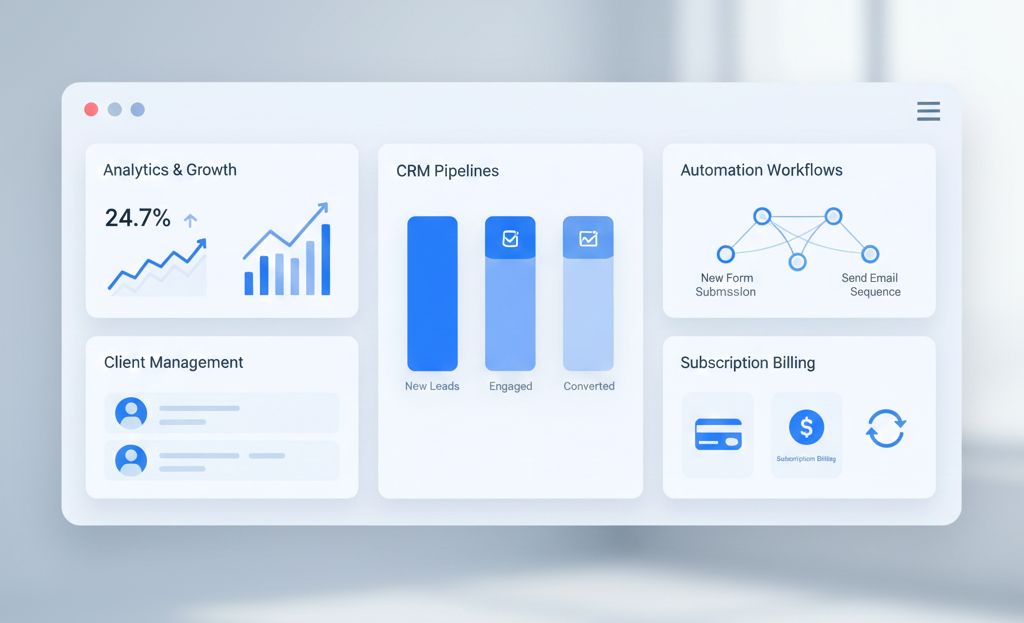
- All-in-one CRM platform
- White-label branding
- Built-in billing & subscriptions
- Automation, SMS, email, funnels, calendars
- No coding required
Instead of building tools, you build systems and outcomes.
That’s why GoHighLevel SaaS model searches are increasing globally.
GoHighLevel business model, Go High Level SaaS platform, CRM SaaS for agencies
Step 1 – Choose a Profitable SaaS Niche (This Decides Your Success)
This is where most people fail.
A generic CRM SaaS does not sell.
A niche-specific SaaS does.
Best-performing Go High Level SaaS niches:
- Local service businesses (home services, clinics, consultants)
- Coaches & course creators
- Real estate teams
- Marketing agencies
- Appointment-based businesses
Your SaaS should solve one core problem:
- Lead follow-up
- Appointment booking
- Missed calls
- Client communication
- Pipeline visibility
Go High Level niche SaaS, Go High Level for agencies, GoHighLevel for local businesses
Step 2 – Set Up Go High Level White-Label Branding Properly
Branding is not cosmetic—it’s psychological.
A professional white-label Go High Level SaaS setup includes:
- Custom domain
- Custom logo & colors
- White-label mobile app (optional)
- Branded login & emails
Clients trust software brands, not tools.
Most “DIY” setups skip this step, which hurts conversions and retention.
This is where a GoHighLevel expert makes a big difference.
GoHighLevel white label setup, GoHighLevel branding, white label CRM SaaS
Step 3 – Build SaaS-Ready Go High Level Automations (Critical)
This step separates real SaaS businesses from basic resellers.
You must create productized automations, not custom workflows for every client.
Core automations every SaaS needs:
- Lead capture → pipeline → follow-up
- Appointment booking & reminders
- Missed call text back
- Review requests
- Client onboarding automation
Your SaaS should work out of the box.
This is why many agencies hire Go High Level automation experts instead of guessing.
Go High Level automation, Go High Level workflows, CRM automation SaaS
Step 4 – Design SaaS Pricing & Plans That Scale
Pricing decides whether you earn ₹30k/month or ₹3L+/month.
Proven GoHighLevel SaaS pricing models:
- Starter (₹2,000–₹3,000 / month)
- Growth (₹5,000–₹8,000 / month)
- Pro / Agency (₹12,000+ / month)
Avoid underpricing.
Clients don’t pay for “CRM.”
They pay for automation + results.
GoHighLevel pricing model, SaaS pricing strategy, GoHighLevel subscription plans
Step 5 – Client Onboarding System (Retention Depends on This)
Most SaaS churn happens in the first 30 days.
A strong onboarding system includes:
- Automated welcome emails
- Setup checklist
- Demo videos
- In-app guidance
- Support ticket system
This reduces:
- Refunds
- Support load
- Client confusion
Professional Go High Level SaaS onboarding increases retention dramatically.
Go High Level onboarding, SaaS client onboarding, CRM onboarding system
Step 6 – Marketing Your GoHighLevel SaaS (What Actually Works)
Forget generic ads. SaaS grows through authority + clarity.
Best marketing channels:
- SEO blogs (like this one)
- LinkedIn outbound
- Cold email (value-based)
- Demo calls
- Case studies
Position yourself as a Go High Level expert, not a reseller.
People buy expertise, not dashboards.
High-ranking keywords:
GoHighLevel expert, GoHighLevel consultant, GoHighLevel a
Step 7 – Scaling with Advanced Integrations (Optional but Powerful)
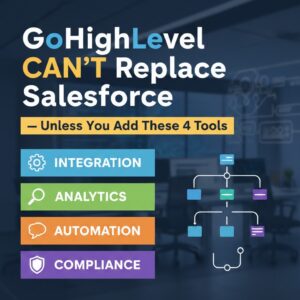
As your SaaS grows, GoHighLevel alone may not be enough.
Advanced SaaS founders integrate:
- n8n / Make.com
- Airtable
- External analytics
- Custom dashboards
This allows:
- Multi-location support
- Advanced reporting
- Custom logic
This is where high-ticket SaaS plans are born.
High-ranking keywords:
GoHighLevel integrations, advanced CRM automation, custom SaaS workflows
Common Mistakes That Kill GoHighLevel SaaS Businesses
Avoid these:
- Selling to everyone
- No onboarding system
- Over-customization
- Weak support
- No expert guidance
Most failed SaaS setups weren’t product problems—they were system problems.
Final Thoughts – Is GoHighLevel SaaS Worth It in 2026?
Yes—if done correctly.
A GoHighLevel white-label SaaS business is one of the fastest ways to build:
- Predictable income
- High client retention
- Long-term brand value
But success depends on architecture, automation, and positioning—not just buying the software.
That’s why serious founders work with a Go High Level expert instead of experimenting.
What is go high level white-label SaaS and how does it work?
Go high level white-label SaaS allows you to sell CRM, automation, and marketing software under your own brand. You control pricing, features, onboarding, and client access while using go high level as the backend platform.
Is go high level good for building a SaaS business?
Yes, go high level SaaS business models are ideal for agencies and consultants because the platform includes CRM, automation, billing, and white-label features—reducing development cost and time to market.
How much does it cost to start a go high level SaaS business?
The base cost for go high level white-label starts with the SaaS plan, but total cost depends on SMS, email usage, integrations, and support systems. Many founders start profitably with under $500/month.
Do I need coding skills to build SaaS on go high level?
No. Go high level automation and CRM setup can be done without coding. However, working with a go high level expert helps build scalable workflows and avoid technical mistakes.
What type of businesses should I target with go high level SaaS?
The best niches for go high level SaaS are appointment-based and service businesses like agencies, consultants, clinics, real estate teams, and local service providers that need lead follow-up automation.
Can I create subscription plans inside go high level?
Yes. Go high level SaaS mode supports recurring subscriptions, usage-based pricing, free trials, and upgrades—making it suitable for long-term monthly recurring revenue (MRR).
What is the difference between go high level SaaS and normal agency setup?
A normal setup is client-by-client service work. Go high level SaaS is a productized model where clients self-onboard, pay monthly, and use pre-built systems—resulting in higher scalability and retention.
Is go high level suitable for white-label CRM reselling?
Yes, go high level white-label CRM is one of the most popular options for agencies because it allows full branding, custom domains, and client-facing dashboards without showing the original platform name.
How do go high level automations help SaaS retention?
Go high level automations handle onboarding, follow-ups, reminders, and reporting automatically. This reduces churn, improves client experience, and increases the lifetime value of SaaS users.
Should I hire a go high level expert to launch my SaaS?
Hiring a go high level expert autoesta is recommended if you want faster setup, scalable automation architecture, proper SaaS pricing, and fewer technical issues. Expert-built systems outperform DIY setups long-term.