Case study at a glance
| Client | DEMP Agency, a marketing agency producing content for many client brands at once |
|---|---|
| Problem | Every writer carried a slightly different mental model of each client's voice, and nothing recorded which one was current. Strategy lived in a kickoff deck nobody reopened, so work drifted from positions the client had already changed, and revision rounds piled up. |
| What we built | A content strategy platform built around messaging pillars: a versioned brand system per client, briefs that pull from it automatically, draft scoring before human review, campaign narratives, structured approval rounds, and a searchable archive across clients. |
| Service | Product strategy and development |
| Timeframe | Built in 6 weeks |
| Reported results | Content brief to approved draft in 2 days, down from 11. Revision rounds down from 4.2 to 1.6 per deliverable. Message consistency score of 94% across campaigns, against 58% at baseline. New writers productive in 3 days instead of about six weeks. 28 client brands managed in the system. |
DEMP: reported results
All figures are reported by the client. Results depend on team size, client mix and how the agency worked before.
What problem did DEMP have?
The agency's problem was not talent. Every writer held a slightly different mental model of each client's voice, and nothing anywhere recorded which model was correct.
Strategy lived in a deck presented once at the start of an engagement and never opened again. Six months later a campaign would go out that was well written and said something the client had explicitly moved away from in the second month, because the person who wrote it was not in the room when that was decided.
The visible cost was revision cycles: about four rounds on a deliverable that should have taken one, most of it spent rediscovering a position the agency had already agreed. The less visible cost was onboarding. New writers took a month and a half to become useful, because the only way to learn a client's voice was to get it wrong in front of a senior editor, repeatedly.
What did we build?
A content studio organized around each client's messaging pillars. The brand system is the single source of truth, and briefs, draft checks, campaign plans and approvals all read from it, so a writer starts from the current position instead of a remembered one.
How a piece of content moves through DEMP
| Feature | What it does |
|---|---|
| Living brand system | One per client: positioning, messaging pillars, proof points, approved and forbidden terminology, and tone guidance with worked examples. Versioned, so every change is dated and attributable. |
| Auto-filled briefs | A new brief pulls the current brand system automatically, so the writer never works from an old deck or memory. |
| Draft scoring | Drafts are checked against the brand system for terminology, tone and pillar coverage before a human reviewer sees them. |
| Campaign narratives | Each piece links to the campaign arc it belongs to, so a run of individually good posts still adds up to one story. |
| Structured approval | Review happens in defined rounds, and each comment is attached to the brand rule it invokes rather than to personal preference. |
| Content archive | Searchable across clients by pillar and format, so nothing gets written twice. |
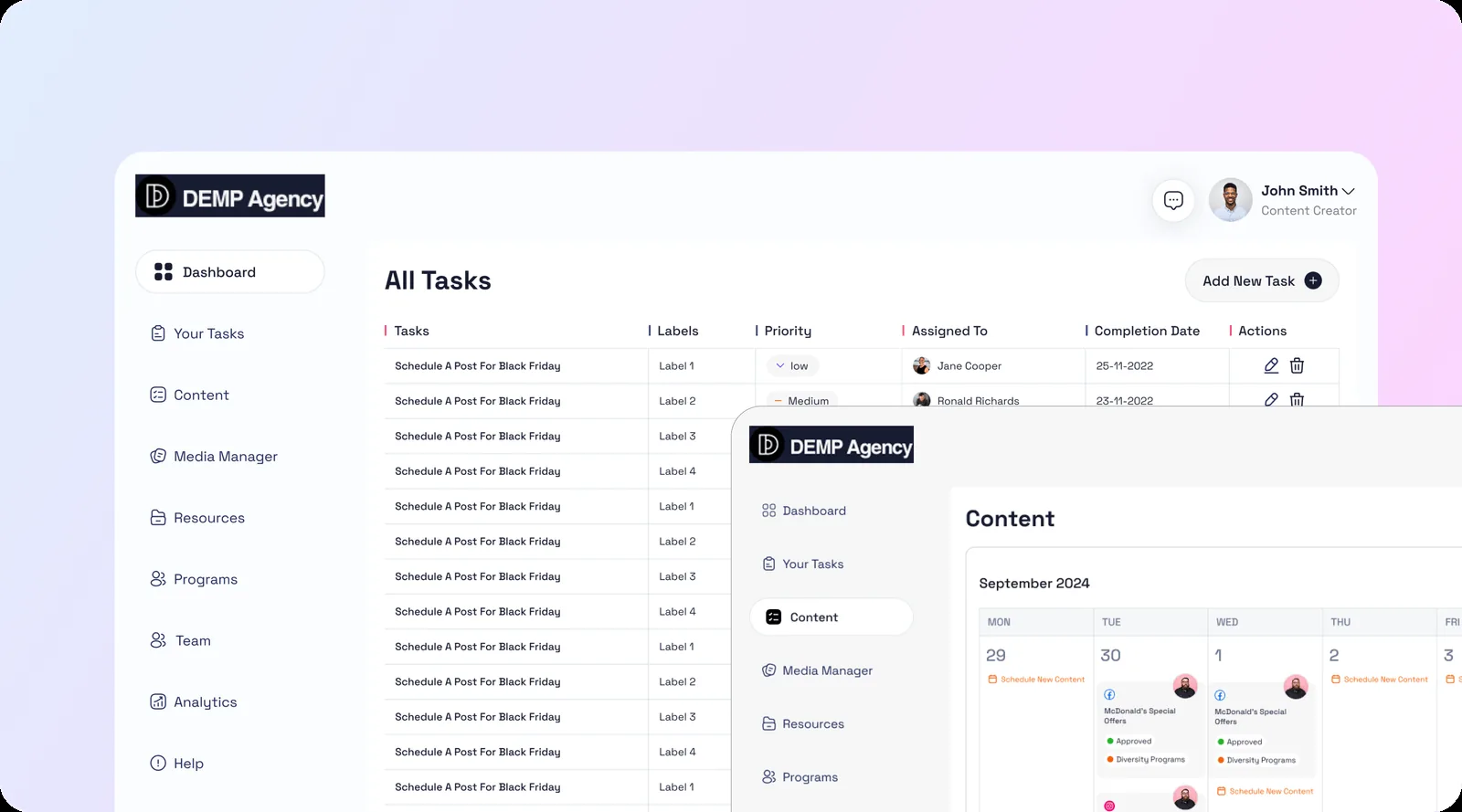
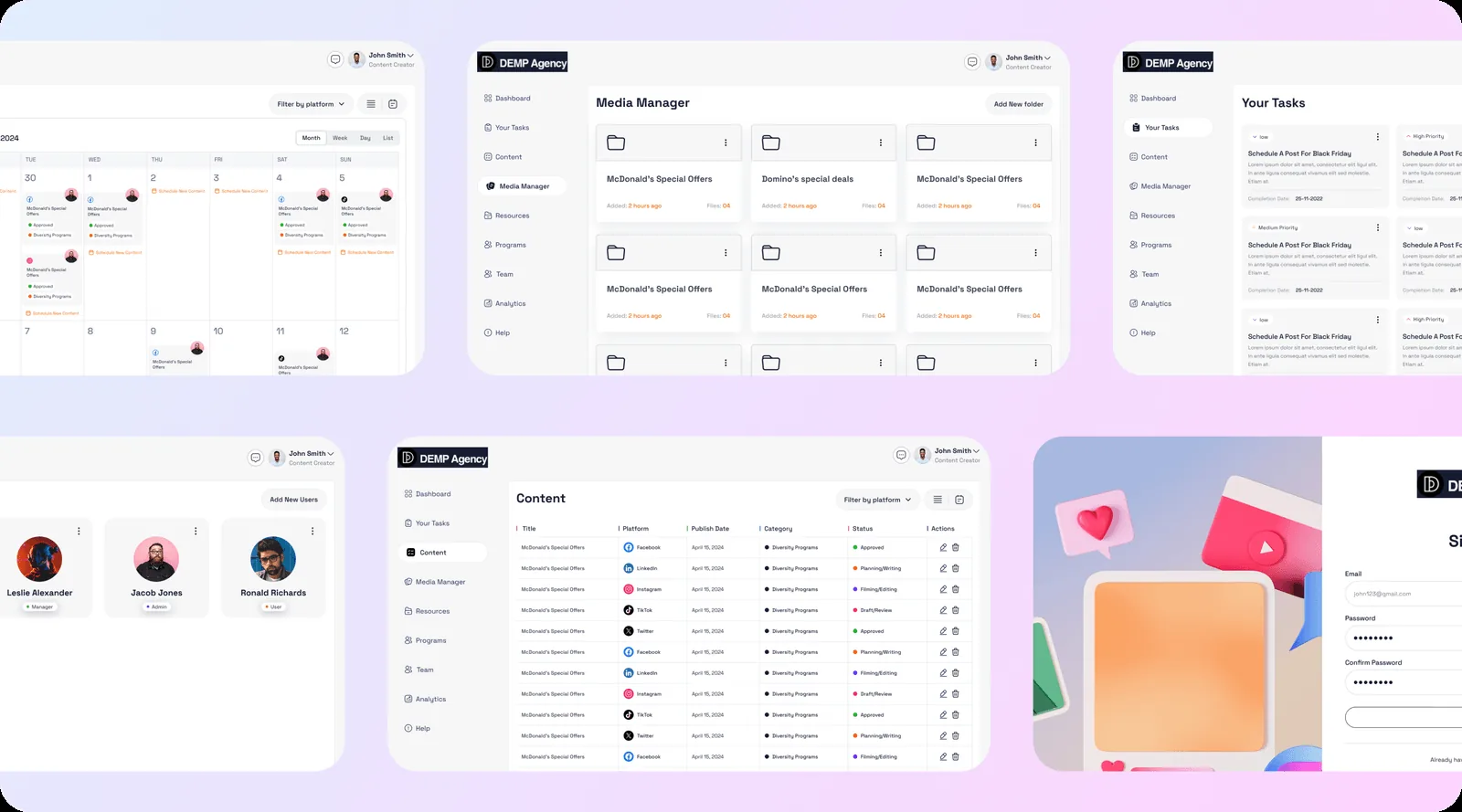
| Planning and production | Task lists with priority and assignee, a content calendar filterable by platform, a media manager with client folders, and team roles. |
What changed?
Reported by the client: content brief to approved draft in 2 days instead of 11, revision rounds down from 4.2 to 1.6 per deliverable, a message consistency score of 94% against a 58% baseline, and new writers productive in 3 days rather than about six weeks. The system now holds 28 client brands.
Days, before and after
| Measure | Before | After |
|---|---|---|
| Content brief to approved draft | 11 days | 2 days |
| Revision rounds per deliverable | 4.2 | 1.6 |
| Message consistency score across campaigns | 58% | 94% |
| Time for a new writer to become productive | About six weeks | 3 days |
| Client brands managed in the system | n/a | 28 |
The consistency score is the agency's own internal measure, so compare it with their 58% baseline, not with figures from other companies.
Why did revision rounds fall?
Because writers started correct, not because reviewers got more lenient. When the brief already carries the current positioning and the draft is checked against the brand rules before review, most of what used to take three extra rounds never gets written in the first place.
Revision rounds per deliverable
Revision rounds falling from four to under two is the number that pays for the system. Each round costs a senior reviewer's time and adds waiting before the piece can ship, and most of the old rounds went on re-establishing a position the agency had already agreed with the client. Tying review comments to a named brand rule also changed the conversation: "this breaks the terminology rule" is quicker to resolve than "I don't like this".
Why did onboarding matter more than speed?
Getting a new writer productive in three days changed who the agency could hire and how fast, which removed the bottleneck that had kept it from taking on larger retainers.
Under the old way of working, house style was absorbed by osmosis over about six weeks, and every new hire cost a senior editor's attention for that whole period. With each client's voice written down, versioned and illustrated with worked examples, a new writer reads the brand system, gets a brief that already reflects it, and has drafts checked against it. Growth stopped depending on how many people a senior editor could personally train.
What does DEMP's brand system look like?
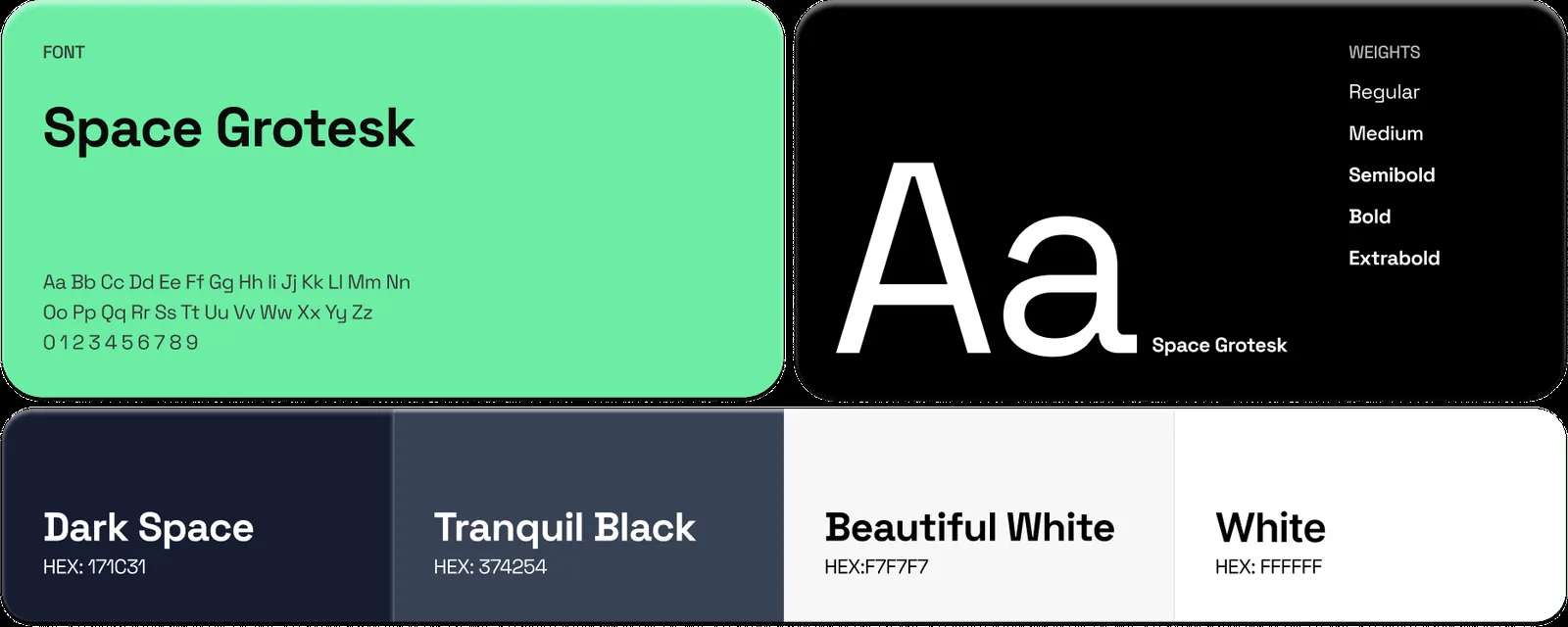
Space Grotesk in five weights, Regular to Extrabold, on a restrained palette of two dark blue-greys, an off-white and white.
| Color | Hex |
|---|---|
| Dark Space | #171C31 |
| Tranquil Black | #374254 |
| Beautiful White | #F7F7F7 |
| White | #FFFFFF |
A neutral palette suits a tool whose screens are full of other brands' content: the interface stays quiet so each client's own material is what stands out.
How does a piece of content move through DEMP?
The brand system feeds the brief, the writer drafts, the draft is scored against the brand rules, it goes through structured approval, and the published piece lands in the searchable archive under its pillar and campaign.
- Brand system. Current positioning, pillars, terminology and tone for the client, versioned.
- Brief. Created with the brand system pulled in automatically and linked to a campaign arc.
- Draft and score. The draft is checked for terminology, tone and pillar coverage before review.
- Approval. Defined rounds, with each comment tied to the brand rule it invokes.
- Archive. Filed by client, pillar and format, searchable so work is reused, not rewritten.
Want a similar product built?
DEMP is custom software, not a GoHighLevel or CRM project, the same kind of build as our Coo, Our Fusion, Drop My Drip, Spirit Airlines, HirePrep, GoHangars , Farmers Market Haul and ITS case studies. If you run an agency or a content team and need internal tooling built around how you actually work, see our custom web applications page, or SaaS product development if you plan to sell the tool to other teams.
See our other case studies, our custom software page and technology stack, and our about page for who's behind the work. If your agency's problem is lead handling and client onboarding rather than content production, our digital agencies page covers that side. Use the contact page to tell us what you're trying to build.
More questions about building a content strategy platform
How much does it cost to build a content platform like DEMP?
It depends on scope. DEMP's first version took 6 weeks of product strategy and development for the brand system, briefs, draft scoring, campaign narratives, approval rounds and archive. Custom software is quoted per project, not from a fixed price list, so book a call for a number specific to your build.
How long does a build like this take?
DEMP was built in 6 weeks. Timeline depends on how many features the first version needs and how much existing content and brand material has to be brought in at launch.
Why build this instead of using an off-the-shelf content tool?
Buy off the shelf when your process already fits one. DEMP's core need was a versioned brand system per client that briefs, draft checks and approvals all read from, and that is the part general project and calendar tools don't model. If a standard tool covers your workflow, we'll say so on the call.
Can this work for an in-house marketing team rather than an agency?
Yes. The multi-client structure matters most to agencies, but the same brand-system-first approach applies to an in-house team running several product lines or regions that each need a consistent voice.
Who owns the code and design after the build?
You do. Confirm the specifics in your contract, but the standard is that what we build for you is yours.
How do I talk to someone about a custom build?
Book a free 30-minute strategy call or use the contact page. Bring what you're trying to build and who it's for.