Case study at a glance
| Client | GoHangars, a nationwide aircraft hangar storage marketplace |
|---|---|
| Problem | Aircraft owners found hangar space by phoning airports one at a time and hoping someone picked up, while operators sat on empty bays with no way to advertise them beyond a sign at the gate. |
| What we built | A two-sided marketplace: separate onboarding for owners and operators, airport-code search with map view, listings with the physical details that determine fit, availability calendars, Stripe Connect payouts, insurance certificate verification, and in-platform messaging. |
| Service | Product strategy and development |
| Timeframe | MVP shipped in 7 weeks from the first call |
| Reported results | 1,240 hangar listings across 38 states in the first six months. Three weeks of phone calls down to same-day booking for an owner searching for space. Operator occupancy up from 61% to 83% across facilities active for a full year. $2.1M in booking volume in year one. 480 aircraft owners registered within 90 days of launch. |
All figures are reported by the client. Results depend on regional hangar supply and how many operators list in a given market.
What problem did GoHangars have?
Finding hangar space in the US still works roughly the way it did in 1985. An owner calls the airport, reaches the FBO, and gets told what is available or gets no answer at all. Owners store six-figure aircraft based on whoever picked up the phone that day.
The founder spent eleven years managing an FBO before starting GoHangars, and arrived with a spreadsheet: 300 rows of hangar operators he had phoned personally, door dimensions and monthly rates typed in by hand. He built it to place his own aircraft, then found other owners kept asking to borrow it. Operators, meanwhile, sat on empty bays for months with no way to advertise them beyond a sign at the gate. He had tried twice before to get a real platform built: a designer produced a Figma file he liked, then two offshore teams took deposits and delivered nothing usable.
What did we build?
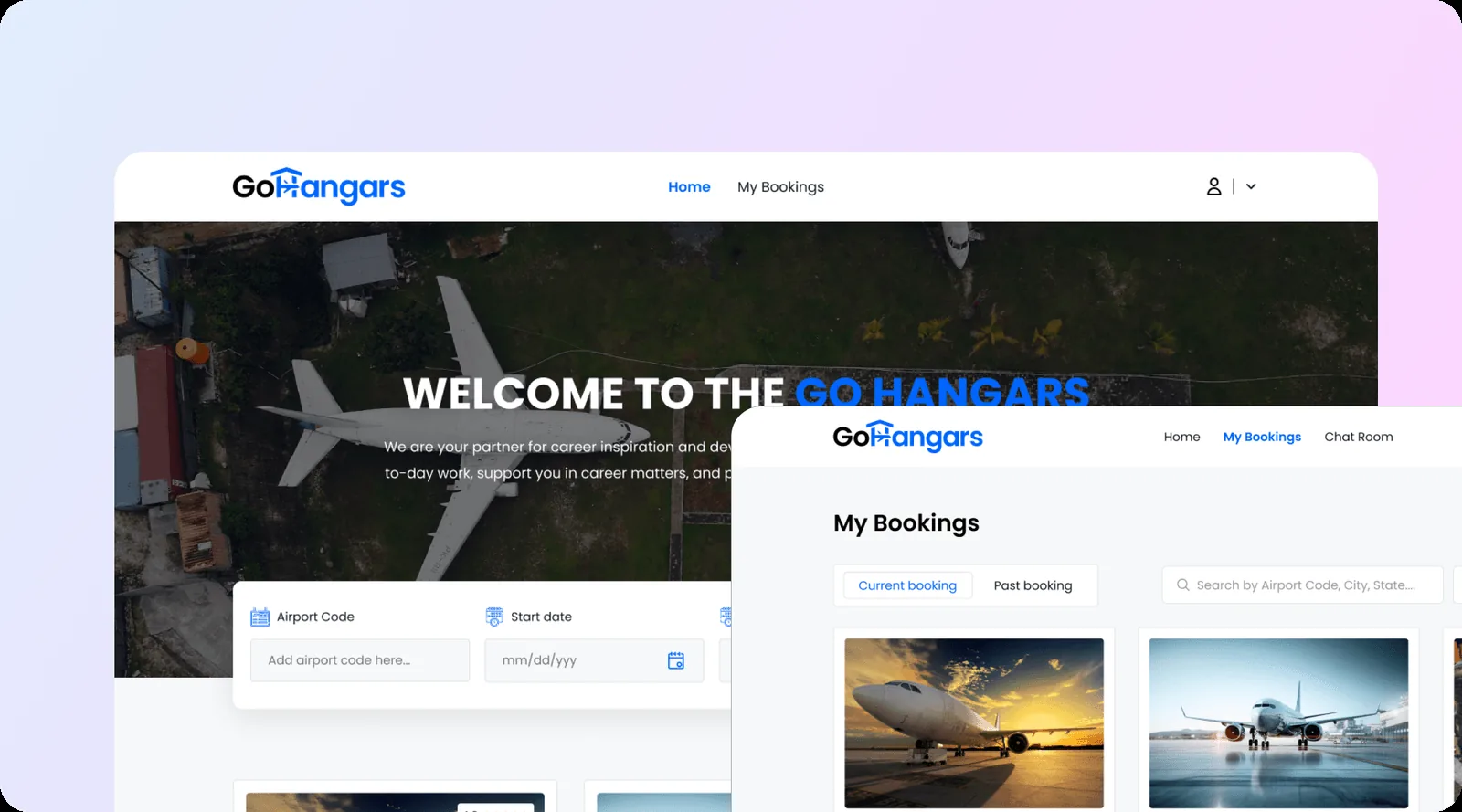
A two-sided marketplace with separate onboarding for aircraft owners and facility operators, search by airport identifier, listings that capture what actually determines whether an aircraft fits, and payments running through Stripe Connect with automatic operator payouts.
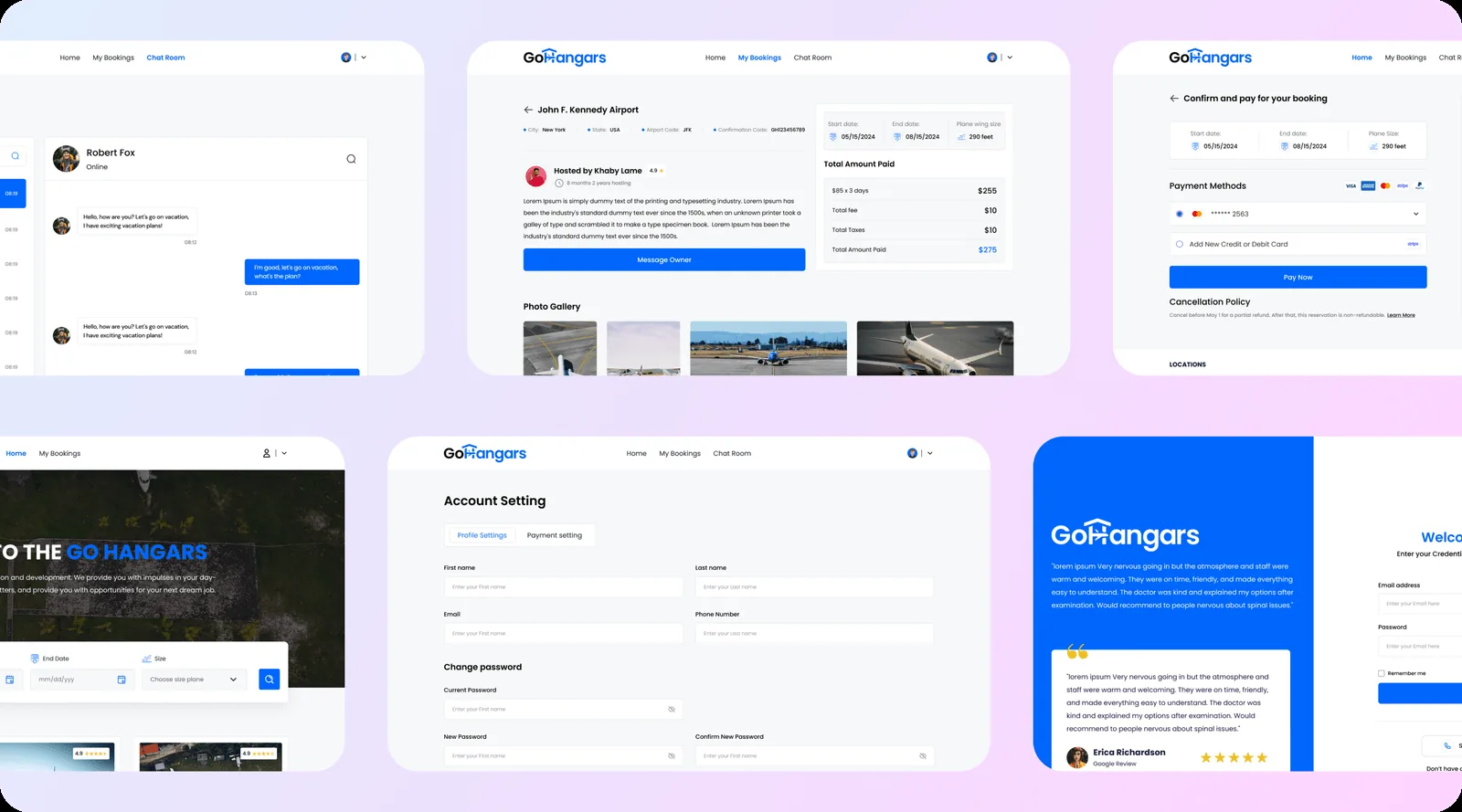
How a booking moves through GoHangars
| Feature | What it does |
|---|---|
| Two-sided onboarding | Separate flows for aircraft owners and facility operators, since the two sides need different information to get started. |
| Airport-code search | An owner types an identifier like KAPA and sees what is open at that airport, with map view and radius expansion when nothing local is free. |
| Fit-matching listings | Listings capture door width and height, usable depth, power availability, and whether a bay is heated or unheated, shared or private. Owner profiles store wingspan, tail height and length, and listings filter automatically so nobody books a bay their aircraft cannot physically enter. |
| Availability calendar | Supports monthly, annual, and transient stays, rather than assuming every booking is a long-term lease. |
| Stripe Connect payments | Automatic operator payouts and platform fee handling built in. |
| Insurance verification | Certificates upload against each booking and are verified before confirmation. |
| Operator dashboard | Occupancy tracking so an operator can see utilization across their listings at a glance. |
| In-platform messaging | Both sides message inside the platform, so enquiries stay attached to the listing instead of disappearing into personal email. |
What changed?
Reported by the client: 1,240 hangar listings across 38 states in the first six months, an owner's search time down from three weeks of phone calls to same-day booking, operator occupancy up from 61% to 83% across facilities active for a full year, $2.1M in booking volume in year one, and 480 aircraft owners registered within 90 days of launch.
GoHangars: reported results
| Measure | Reported result |
|---|---|
| Hangar listings | 1,240 across 38 states, first six months |
| Owner search time | Three weeks of calls to same-day booking |
| Operator occupancy | 61% to 83%, facilities active a full year |
| Booking volume | $2.1M, year one |
| Aircraft owners registered | 480 within 90 days of launch |
GoHangars closed a seed round nine months after launch, on listing growth and repeat booking rate rather than a deck. The founder hired two people, one on operator supply and one on support, and stopped doing both jobs himself. The spreadsheet is gone; what replaced it is a supply side that grows without him calling anyone, since operators now find the platform and list themselves. That was the part he was least confident would happen going in.
Why did operator occupancy rise from 61% to 83%?
An operator's empty bay was previously advertised nowhere beyond a sign at the gate. Listing it on a marketplace that owners actually search by airport code puts it in front of the exact demand that was already looking, just unable to find it.
Operator occupancy, before and after
Transient bookings, which the founder had treated as an afterthought at launch, turned out to be a third of volume. That matters for the occupancy number specifically: a bay that only fills on annual leases sits empty between tenants, while one that can also take a week-long transient stay closes more of that gap. The availability calendar supporting all three stay types was what made that possible.
Why did the search need to run on airport code rather than a general search box?
An owner already knows the airport identifier for wherever they are flying to or storing at, and searching that way returns exact, locally relevant results instead of a list an owner has to filter by location themselves.
Fit-matching against stored aircraft dimensions solves the other half of the same problem: a search result that lists a bay too small for the aircraft is worse than no result, because it costs the owner a wasted call to confirm it will not work. Filtering against door width, height and usable depth before a listing ever appears removes that dead end.
What does GoHangars' brand system look like?
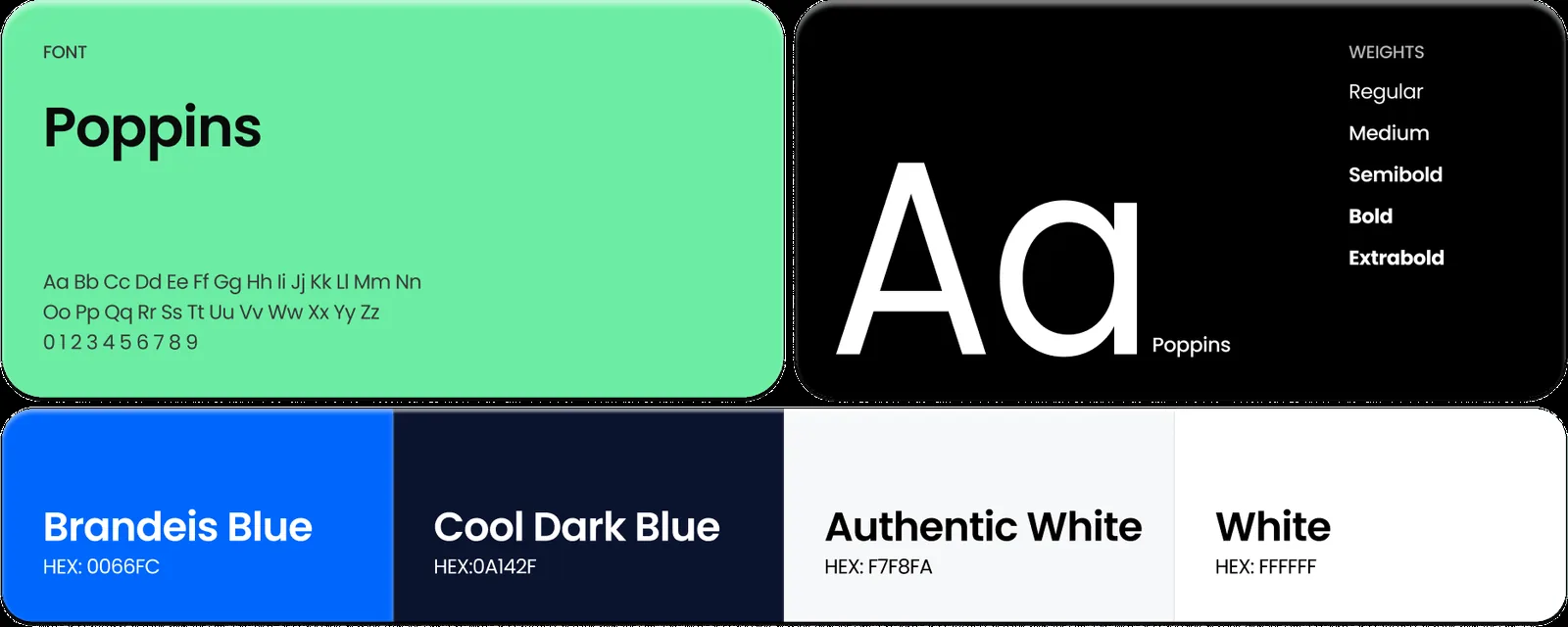
Poppins, in five weights from Regular to Extrabold, on a palette of bright blue, near-black navy, and white.
| Color | Hex |
|---|---|
| Brandeis Blue | #0066FC |
| Cool Dark Blue | #0A142F |
| Authentic White | #F7F8FA |
| White | #FFFFFF |
How does a booking move through GoHangars?
An owner searches by airport code, filters return listings their aircraft physically fits, they message the operator and select dates on the availability calendar, upload insurance for verification, and pay through Stripe Connect with the operator paid out automatically.
- Search. By airport identifier, with map view and radius expansion if nothing local is free.
- Filter. Listings match automatically against the owner's stored aircraft dimensions.
- Message. Owner and operator talk inside the platform, attached to the listing.
- Book. Monthly, annual or transient stays on the availability calendar.
- Verify and pay. Insurance certificate uploaded and verified, payment through Stripe Connect, operator paid out automatically.
Want a similar product built?
This is custom software, not a GoHighLevel or CRM project, the same kind of build as our Coo, Our Fusion, Drop My Drip, DEMP, Spirit Airlines, HirePrep , Farmers Market Haul and ITS case studies. If you run a two-sided marketplace with a supply side that needs its own onboarding, fit-matching, or payout logic, see our custom web applications page, or SaaS product development if you plan to grow it the way GoHangars did.
See our other case studies, our custom software page and technology stack for what we actually build with, and our about page for who's behind the work. Use the contact page to tell us what you're trying to build.
More questions about building a two-sided marketplace
How much does it cost to build a marketplace like GoHangars?
It depends on scope. This build took 7 weeks of product strategy and development for two-sided onboarding, search, fit-matching, availability, payments and messaging. Custom software is quoted per project, not from a fixed price list, so book a call for a number specific to your build.
How long does a build like this take?
GoHangars' MVP shipped in 7 weeks from the first call. Timeline depends on how much the matching and payment logic needs to handle before launch, and how many listing attributes the first version needs to capture.
Can this work outside aviation storage?
Yes. A two-sided marketplace with fit-matching, availability scheduling, and marketplace payouts applies to any space or equipment rental category where the buyer needs to confirm physical compatibility before booking: boat slips, RV storage, and specialized equipment rental are common fits. See our solutions pages for the problem-first side of what we build, then book a call and tell us what you're building.
Why did the founder try twice before this build succeeded?
A Figma file from a designer is not a working product, and two offshore teams took deposits and delivered nothing usable. Those are common failure points on marketplace builds specifically, since the two-sided logic, payments, and fit-matching all need to work together, not just look right in a mockup.
Who owns the code and design after the build?
You do. Confirm the specifics in your contract, but the standard is that what we build for you is yours.
How do I talk to someone about a custom build?
Book a free 30-minute strategy call or use the contact page. Bring what you're trying to build and who it's for.