What does a custom software development company actually do?
A custom software development company designs and builds an application built specifically around one business's process, instead of configuring an off-the-shelf tool to fit around it. Autoesta does this as product strategy, design, and development inside one team, not separate vendors handed off to each other.
That's close to the language used on Autoesta's three published custom software case studies: "product strategy and development" for Coo and Our Fusion, "UX/UI and development" for Drop My Drip. Strategy comes first, to work out what the product needs to do and for whom. Design turns that into screens and a brand system. Development builds it. Launch and handover close the loop. One team carries a build through all four stages. Nothing gets lost in a handoff between a strategy firm, a design agency, and a development shop that has never spoken to either of them.
This is different from buying and configuring a SaaS tool, which is often the right call when your process already fits inside one. Autoesta builds both, depending on what a client needs; see our technology stack for the tools we configure either way.
- Strategy. What is this product for, who uses it, and what does version one actually need to include.
- Design. Screens, flows, and a brand system built for this product, not a template.
- Development. The application gets built, tested, and connected to whatever it needs to run on.
- Launch and handover. The product ships, and the client gets documentation and, per the contract, the code.
What has Autoesta built as custom software?
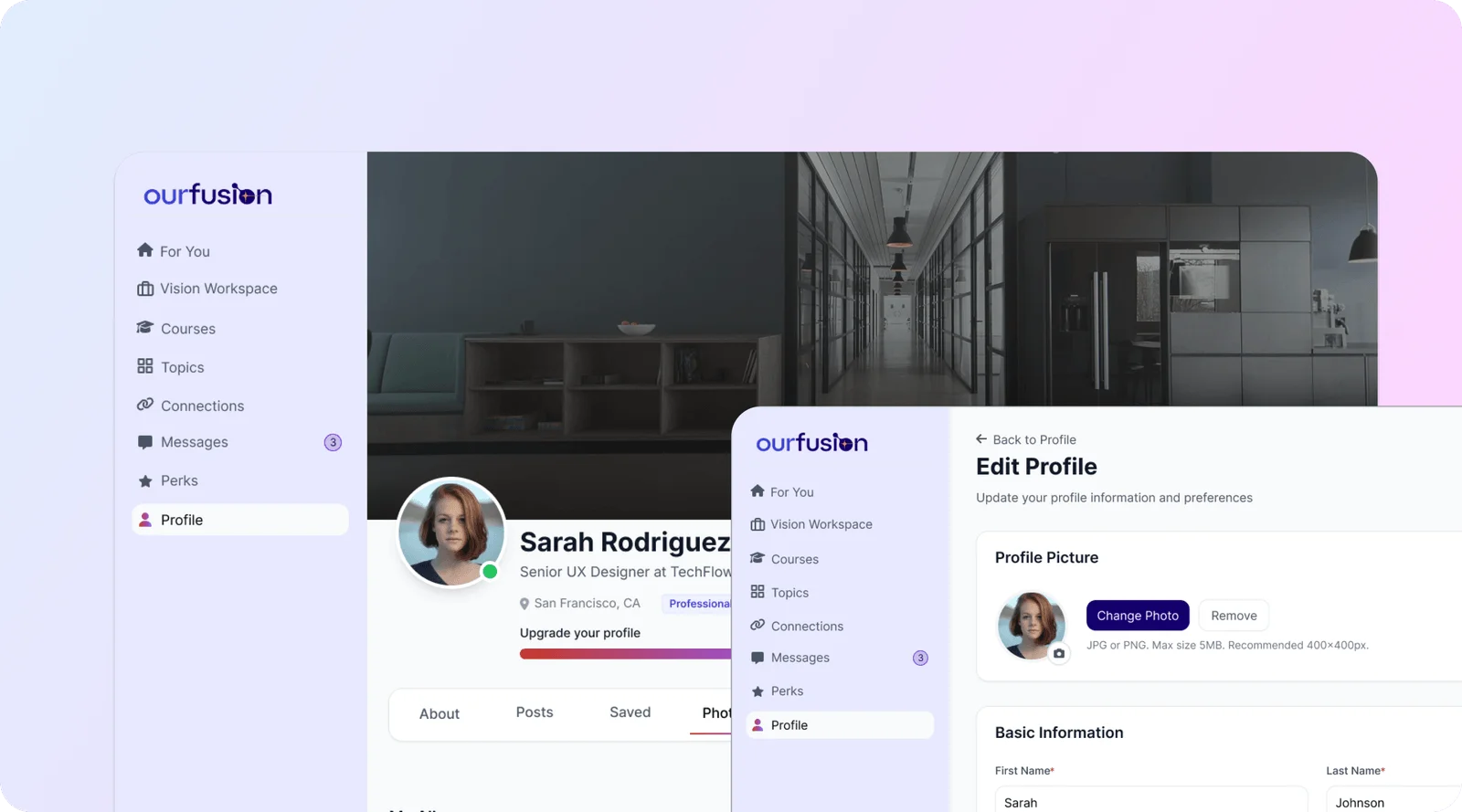
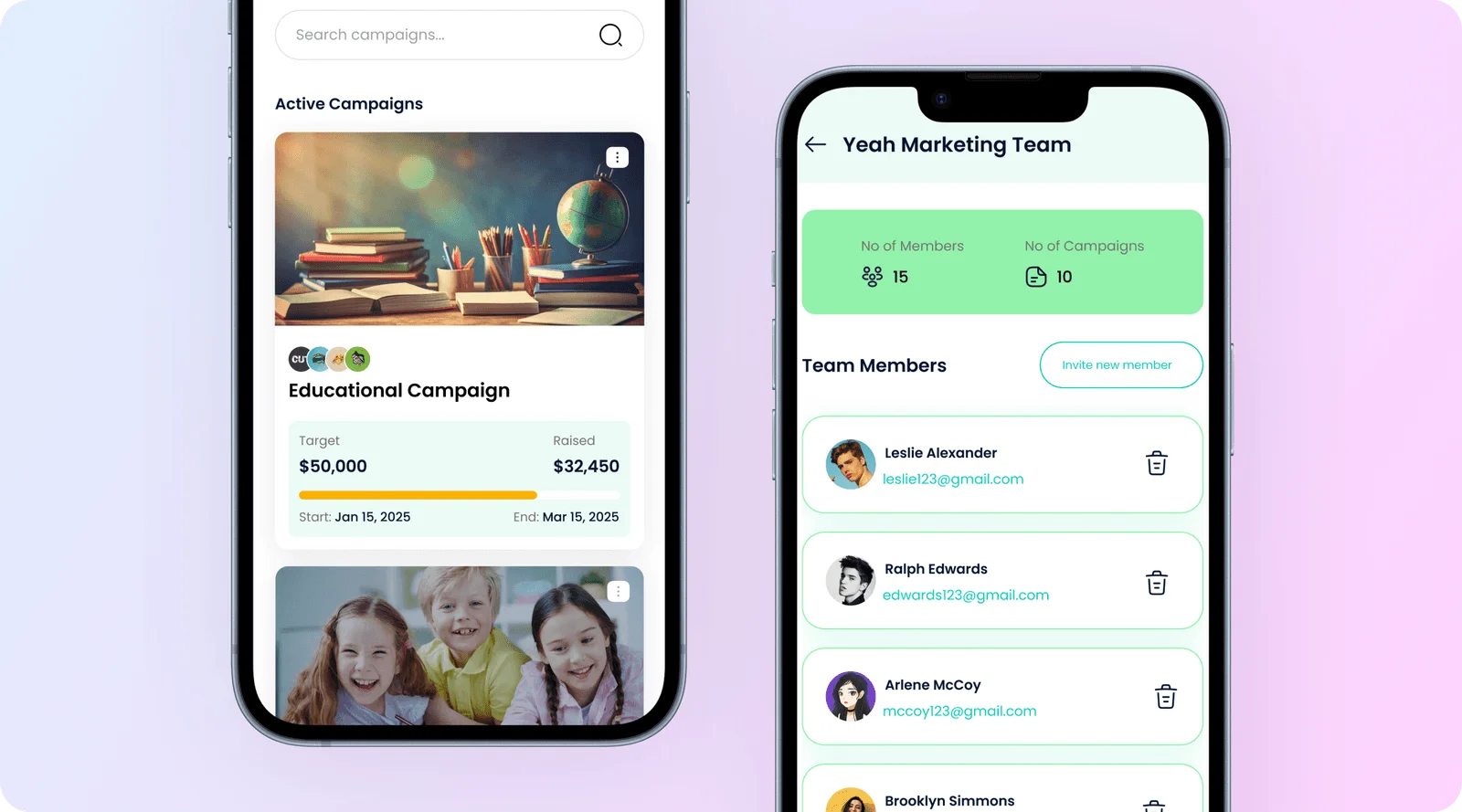
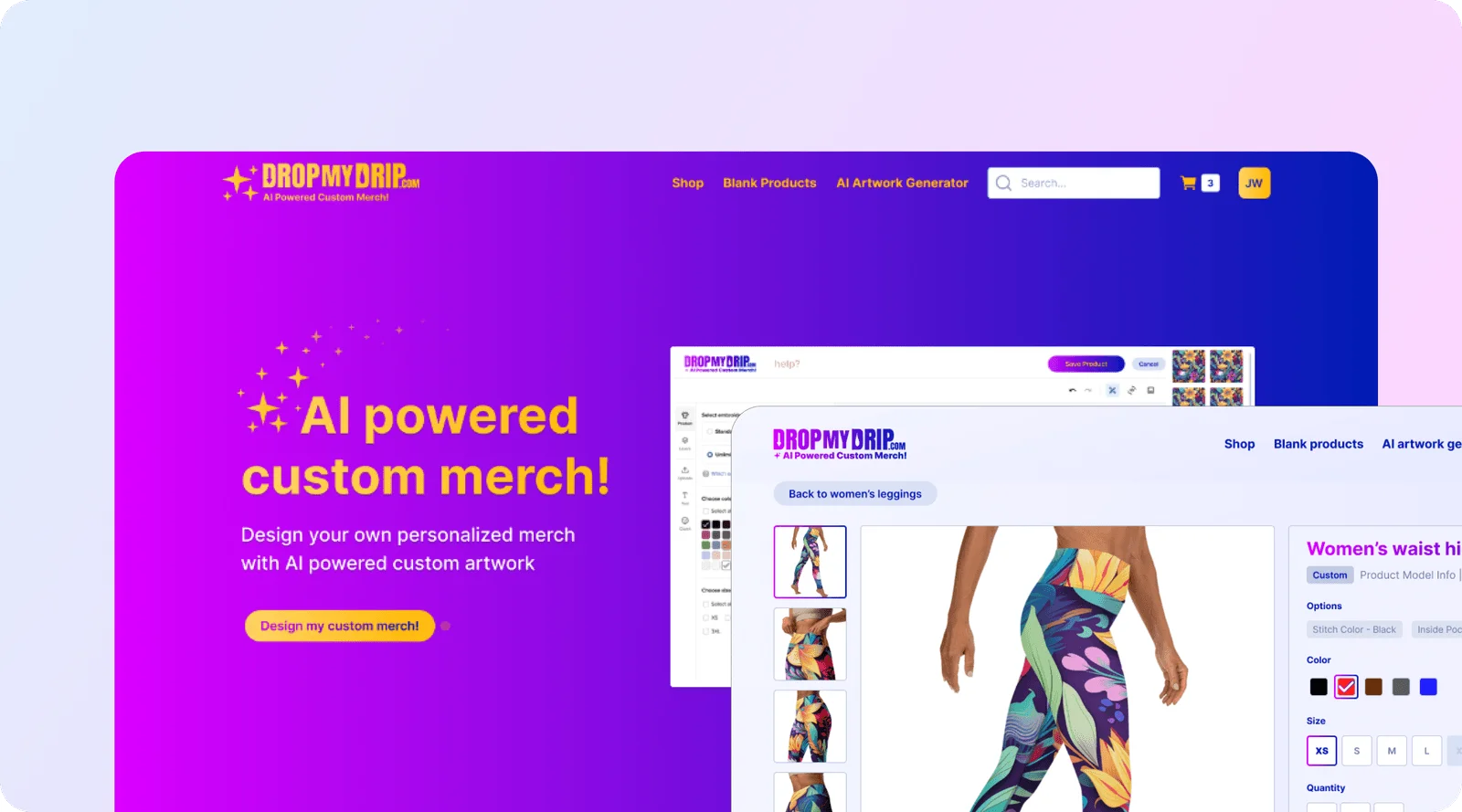
Three real, published products: Coo, a local deals marketplace app used by 2,100 businesses across four cities in its first year; Our Fusion, a curated professional community platform with 34,000 members and a 61% weekly active rate; and Drop My Drip, an AI-powered custom apparel platform that cut returns from a 23% category norm to 4%.
Build time for three published products
Autoesta doesn't describe this capability in the abstract. Each build shipped with one specific decision behind its result, not a generic feature list.
Coo's founders chose flat monthly pricing with no commission. That's a harder sell up front than a typical daily-deals cut, but it's the reason merchant retention held.
Our Fusion's team removed public engagement metrics from the platform entirely. The case study itself calls that decision "contested" at the time, and it's a direct contributor to the 61% weekly active rate.
Drop My Drip's team decided the fix for apparel returns was a realistic garment visualization engine, not a better design tool. That one decision is what moved the return rate.
| Product | What it is | Built in | Reported result |
|---|---|---|---|
| Coo | Local deals marketplace app for small businesses | 6 weeks | 2,100 businesses listed, four cities, first year |
| Our Fusion | Curated professional community platform | 7 weeks | 34,000 members, 61% weekly active, first year |
| Drop My Drip | AI-powered custom apparel platform | 8 weeks | 4% return rate, versus a 23% category norm, first year |
Figures above are reported by each client for their first year. See all our case studies for the full detail behind each number, including the time window it covers.
Is this different from Autoesta's GoHighLevel or CRM work?
Yes. GoHighLevel, n8n, and Zapier are the backend Autoesta uses for AI agents, automation, and CRM projects; Coo, Our Fusion, and Drop My Drip involved none of that, and each is a standalone product built from scratch.
This is a new layer alongside Autoesta's existing AI-agent and CRM backend work, not a replacement for it. Most of what the site talks about elsewhere, AI agents and GoHighLevel setup, runs on top of a CRM. All three custom software builds run on none. A lot of what ranks under "custom software" in search results is white-labeled CRM customization built on top of a platform like GoHighLevel, dressed up to look like an independent product. Autoesta's three named builds have no CRM underneath at all. That's a genuine point of difference, not a marketing line.
If what you need is CRM pipelines, automations, or an AI agent answering leads, start with our AI agents or GoHighLevel setup instead of this page.
What kinds of custom software does Autoesta build?
Web and mobile applications, marketplaces, membership and community platforms, and AI-powered product features, the same range covered by Coo, a mobile marketplace app, Our Fusion, a community platform, and Drop My Drip, an AI-powered apparel platform.
- Marketplace and discovery apps. Merchant or seller dashboards, proximity- and category-based discovery, and redemption or transaction flows, the pattern behind Coo.
- Membership and community platforms. Curated, application-based membership, specialism-based circles, threaded discussion, and a searchable knowledge archive, the pattern behind Our Fusion.
- AI-powered product features. An AI artwork or content generator built into the product itself, and a visualization engine that renders a design realistically before checkout, the pattern behind Drop My Drip.
- Customer-facing apps generally. Design canvases, saved-item accounts, order or booking routing, and reporting dashboards, features drawn directly from the three builds above rather than a generic category list.
Mobile app development and SaaS product development sit close enough to these three builds that a reader asking about either belongs on this page too. Mobile now has its own dedicated page: see mobile app development for platform choice, app store submission and review, push notifications and offline UX. SaaS product development doesn't have its own page yet.
How does Autoesta's custom software process work, start to finish?
Product strategy first, then design, then development, then launch, all as one process, the same sequence documented on Coo, Our Fusion, and Drop My Drip, each shipped in 6 to 8 weeks.
The custom software process
- Discovery and strategy. Define what the product needs to do, for whom, and what version one actually needs versus what can wait.
- Design. Screens, flows, and a brand system, typeface, color palette, and component patterns, built for this product. All three published case studies include a real brand style guide from this step.
- Development. The application gets built against the agreed scope, feature by feature.
- Testing. Real use cases, not just the happy path, before anything ships to a real user.
- Launch and handover. The product goes live, and the client gets documentation and, per the contract, the code.
How long does a custom software build take?
It depends on scope: Autoesta's three published builds took 6 to 8 weeks each for a first version with a defined feature set. A smaller MVP takes less; more platforms or features take longer.
| Product | Scope | Timeframe |
|---|---|---|
| Coo | Merchant dashboard, discovery, redemption, reporting | 6 weeks |
| Our Fusion | Curated membership, circles, threaded discussion, knowledge archive | 7 weeks |
| Drop My Drip | Design canvas, AI artwork generator, realistic visualization, order routing | 8 weeks |
Every one of these case studies gives the same honest answer in its own FAQ. Timeline depends on how many core features the first version needs, and how much of the design is settled before development starts. A build that adds a second platform, deeper integrations, or features beyond what shipped in these three examples will run longer than 8 weeks.
How much does custom software development cost?
Custom software is quoted per project, not from a fixed price list, because scope varies too much to publish one honest number. Book a strategy call for a number specific to your build.
Autoesta does not publish a cost range for custom software, and this page will not invent one. Scope, platform count, and feature complexity move the number too much for a single figure to be useful, or honest, for most projects that ask about it. That's the same approach the n8n automation and API and webhook integration pages take with their own pricing questions.
Who owns the code after the build?
You do, the same standard stated on all three published case studies, confirmed in the contract for each project.
Confirm the specifics in your contract, but the standard on every custom software build Autoesta ships is that what we build for you is yours, code and design both. That's not a special arrangement for larger clients; it's the same line that appears in the FAQ of the Coo, Our Fusion, and Drop My Drip case studies.
Do you build the app, or just design it?
Both. Product strategy, design, and development happen inside one team, the same process behind Coo, Our Fusion, and Drop My Drip.
Some agencies sell design as one engagement and hand a client's files to a separate development shop, or the reverse. Autoesta doesn't split the work that way for custom software: the same team that ran strategy and design carries the product through development, testing, and launch. See our technology stack for what that team builds with.
What technology does Autoesta build custom software with?
It depends on the product: a web app, a mobile app, and a marketplace each need different platform choices, so Autoesta doesn't build every custom project on one fixed stack. What's consistent is the AI layer: AI-powered product features run on large language models, the same category of tool listed under AI on our technology stack page, chosen per build against what that feature needs.
The GoHighLevel, n8n, Airtable, and Twilio tools on that same page are the CRM and automation backend Autoesta uses for AI-agent and CRM projects. Custom software builds like Coo, Our Fusion, and Drop My Drip run with none of that backend underneath, since they're standalone products rather than a layer on top of a CRM. The platform and framework choices for a specific build get decided during strategy, against what that product actually needs to run reliably at its expected scale.
What's the difference between custom software and buying an off-the-shelf tool or a no-code platform?
An off-the-shelf or no-code platform, such as GoHighLevel or a template SaaS tool, is faster and cheaper when your process fits it. Custom software is the right call when your product's differentiation is the workflow itself, not the automation behind it, and Autoesta builds both, depending on what a client needs.
Most agencies that only sell custom development won't admit this. The honest answer is that a lot of businesses that think they need custom software actually need a well-configured existing tool. Autoesta's own GoHighLevel setup and n8n automation work is exactly that answer, for CRM pipelines and cross-system workflows that don't need a bespoke product underneath them. Custom software earns its cost when the thing you're building is the product itself, a marketplace, a community, a design tool, not a process that an existing platform already covers.
When is custom software the wrong choice?
Custom software is the wrong choice when an existing tool already covers most of what you need, or when there's no budget or timeline for a multi-week build. It's also the wrong choice when the business hasn't validated that people want the product yet.
- An existing SaaS or CRM already covers the need. If GoHighLevel, a template SaaS tool, or another off-the-shelf platform does 90% of what you're asking for, configuring it costs less and ships faster than building it from scratch.
- The idea hasn't been validated yet. A landing page or a no-code prototype is cheaper and faster to test with real users before committing to a multi-week custom build.
- There's no internal owner. A custom build needs someone on the client side who can spec requirements and make decisions during the process. Without that, the build stalls or ships the wrong thing.
Telling a prospective client not to build custom software is part of the service, the same as it is on Autoesta's automation and CRM pages. A cheaper, faster answer is sometimes the right one.
Can Autoesta build custom software for my industry or use case?
Yes. The same product strategy and development process behind Coo, Our Fusion, and Drop My Drip applies to a marketplace, membership platform, ecommerce tool, or customer-facing app in any category.
The three published builds cover local deals marketplaces, professional communities, and custom apparel ecommerce, three different industries with the same underlying process. See our solutions pages for the problem-first framing behind Autoesta's work generally, then book a call and describe what you're actually trying to build.
How do I get started?
Book a free 30-minute strategy call, or use the contact page, and bring what you're trying to build.
A strategy call is where scope, timeline, and cost for your specific build get worked out. They're not published in advance on this page because they vary too much to be honest as a general number. Use the contact page if a call isn't the right first step for you, or if what you actually need turns out to be AI automation or an API integration rather than a standalone custom product.
More questions about custom software development
Does Autoesta only build custom software, or also GoHighLevel and automation work?
Both, as separate lines of work. Custom software (this page) covers standalone products like Coo, Our Fusion, and Drop My Drip. AI agents, GoHighLevel setup, and n8n automation cover the CRM and automation backend most of Autoesta's other work runs on.
Is a mobile app the same kind of project as a web app?
Not exactly, they need different platform decisions, but the process is the same: strategy, design, development, testing, launch. Coo is a mobile marketplace app built the same way Our Fusion's web-based community platform was.
Can you take over an existing custom software project someone else started?
Tell us what exists and where it's stuck on a strategy call. Whether taking over an unfinished build makes sense depends on its current state, which is specific enough to each project that it needs that conversation rather than a general answer here.
What if I only need part of this, like design or just the AI feature?
Say so on the call. Product strategy, design, and development happen inside one team here, but the brief for any given engagement gets scoped to what you actually need.
Specific services within custom software: custom web applications, customer portal development, SaaS product development and custom CRM development.