Case study at a glance
| Client | Drop My Drip, an AI-powered custom streetwear and apparel platform |
|---|---|
| Problem | Fashion consumers wanted personalized apparel but lacked accessible tools to design custom clothing or confidently visualize how a design would look as a finished garment. Traditional customization processes were complex and hard to scale digitally. |
| What we built | A custom apparel platform: an AI artwork generator and design canvas, realistic garment visualization with fabric drape and print texture, automatic print-method selection, and order routing to production partners with tracking. |
| Service | UX/UI and development |
| Timeframe | Built in 8 weeks |
| Reported results (first year) | 19,000 custom garments ordered. Return rate of 4%, against 23% typical for online apparel. Design-to-checkout in 11 minutes on average. 62% of customers order a second item within six months. |
Drop My Drip: return rate vs typical online apparel
Figures are reported by the client for the first year. Results vary by product line and market.
What problem did Drop My Drip solve?
Custom apparel has a visualization problem: customers upload artwork, see it pasted flat onto a product photo, order, and receive something that sits differently on real fabric than it did on the mockup, then return it.
The founder had run a small print business and knew exactly where the losses came from. Not production, returns, and almost every return traced back to the same sentence: it did not look like this on the website. The other barrier was creative confidence. Plenty of people want something personalized and stall at a blank canvas, because they aren't designers and the tools assume they are. The brief was to solve both problems in one product: help people arrive at a design they like, then show them truthfully what it will be.
What did we build?
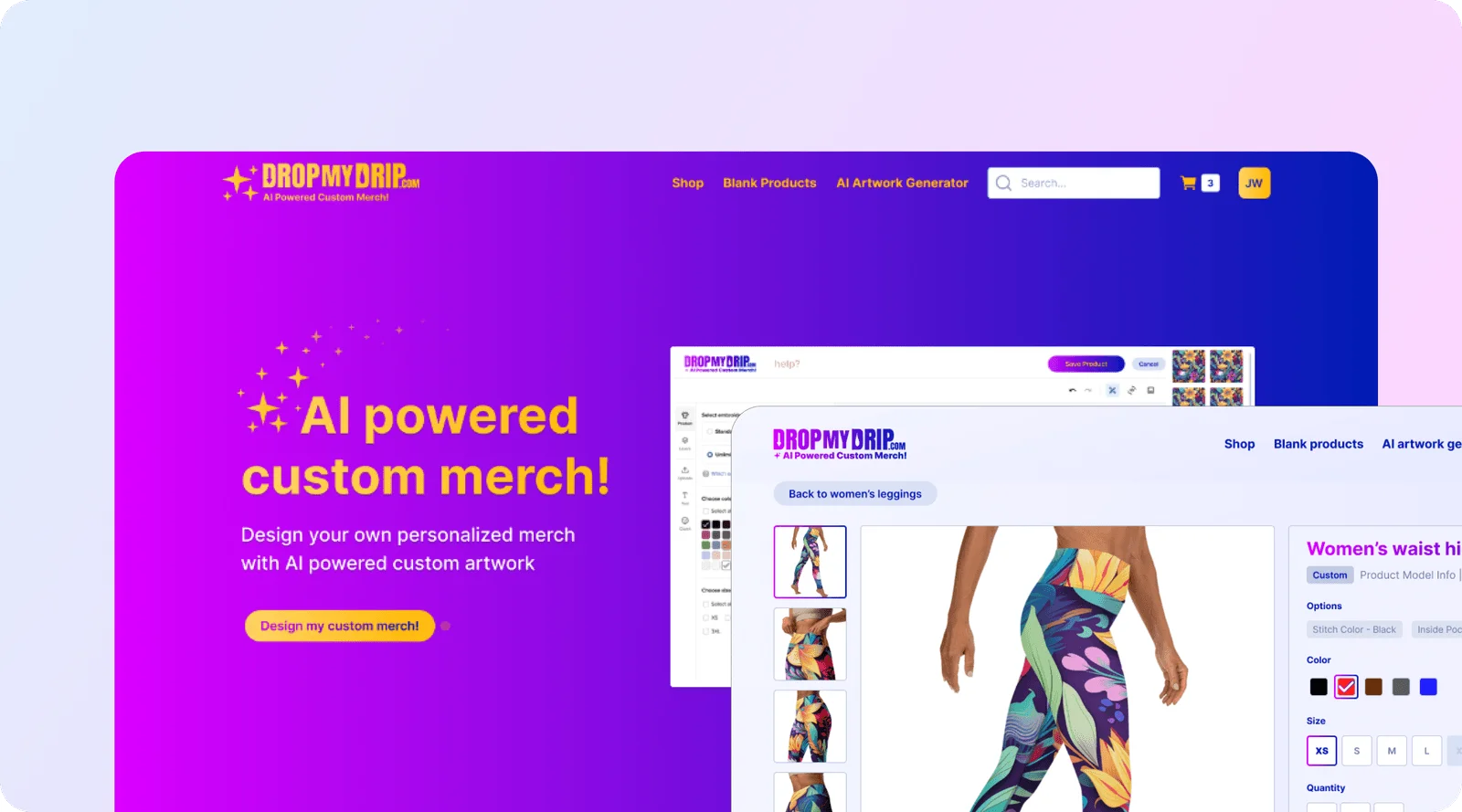
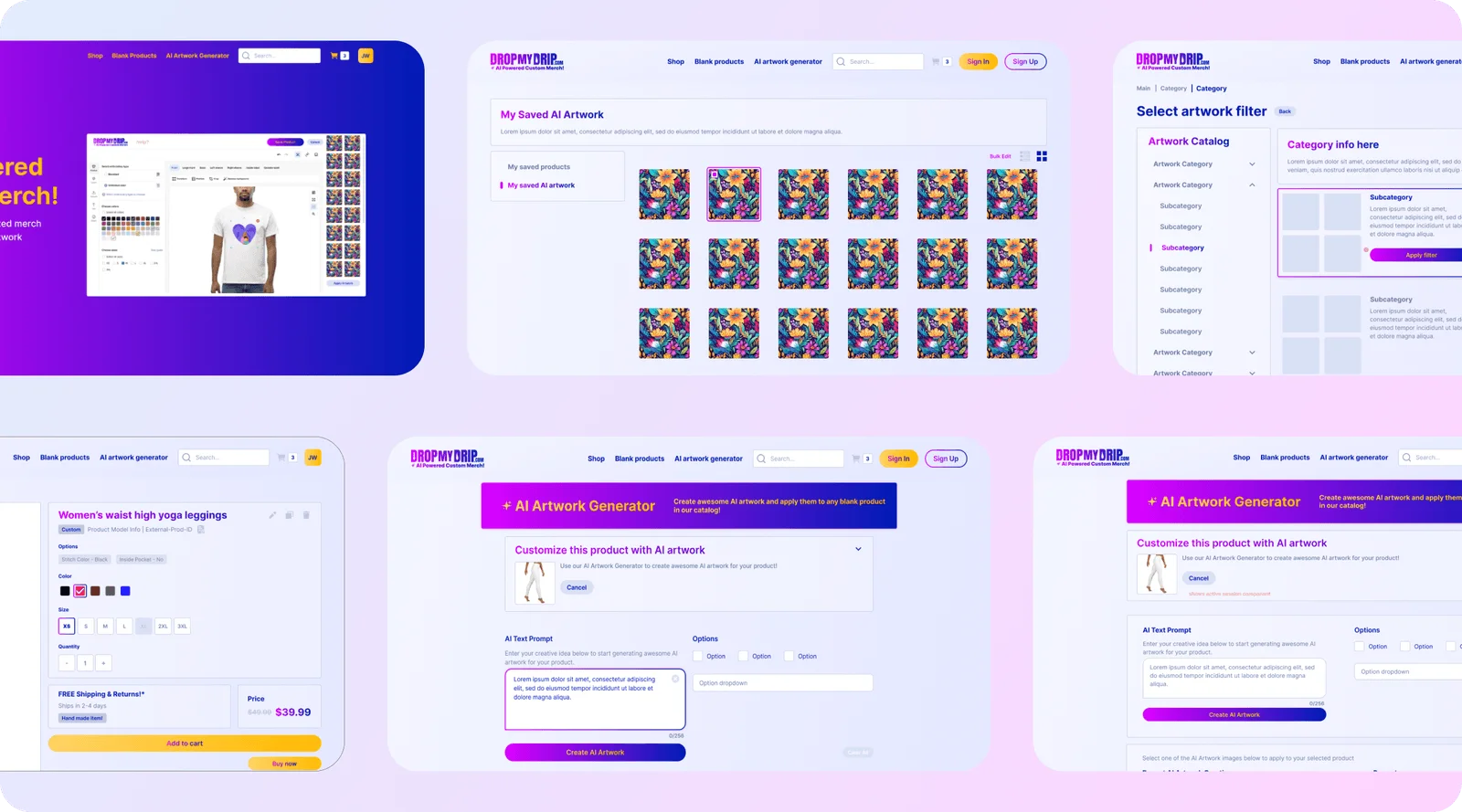
A design canvas with guided starting points and an AI artwork generator, paired with a visualization engine that renders designs onto garment photography with fabric drape, seam distortion and print texture applied, so the preview reflects how the print actually behaves on cloth.
From idea to finished garment
| Feature | What it does |
|---|---|
| Design canvas | Guided starting points so a customer picks a direction and adjusts, rather than facing an empty artboard. Text, artwork upload, layout templates and a curated graphic library. |
| AI artwork generator | A text prompt generates artwork that can be applied directly to a product, saved to an account, and reused across designs. |
| Realistic visualization | Designs render onto garment photography with fabric drape, seam distortion and print texture, on models across sizes. |
| Print validation | Print method is selected automatically from artwork characteristics, with color count and placement validated before checkout, and any issue explained in plain language rather than rejected with an error. |
| Production routing | Orders route to production partners by geography and technique, with tracking through print, quality check and dispatch. |
| Saved designs | Designs save to an account for reordering or editing. |
What changed?
Reported by the client for the first year: 19,000 custom garments ordered, a return rate of 4% against 23% typical for online apparel, an average of 11 minutes from design session to checkout, and 62% of customers ordering a second item within six months.
| Measure | Reported result |
|---|---|
| Garments ordered | 19,000 in year one |
| Return rate | 4%, against 23% typical for online apparel |
| Design-to-checkout time | 11 minutes on average |
| Repeat purchase rate | 62% order a second item within six months |
| Minimum order quantity | Zero; single-item production is economically viable |
Cutting returns from a category-typical 23% to 4% is the core commercial story. Return handling is what makes single-item custom apparel unprofitable, and removing it is what made a zero-minimum-order model work at all. The repeat rate followed from the same place: a customer whose first order matched the preview comes back, and 62% of them do.
What does Drop My Drip's brand system look like?
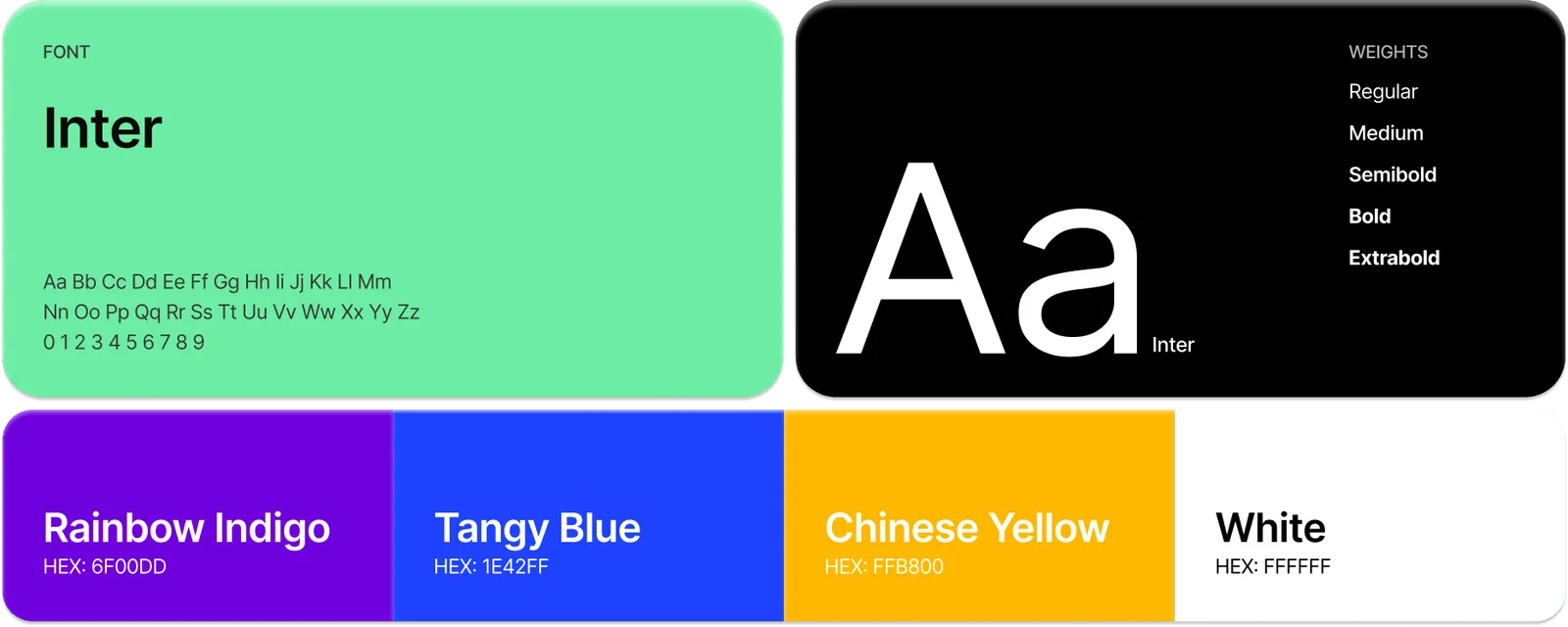
Inter, in five weights from Regular to Extrabold, on a palette of indigo, blue, yellow and white.
| Color | Hex |
|---|---|
| Rainbow Indigo | #6F00DD |
| Tangy Blue | #1E42FF |
| Chinese Yellow | #FFB800 |
| White | #FFFFFF |
Want a similar product built?
Drop My Drip is custom software, not a GoHighLevel or CRM project, the same kind of build as our Coo and Our Fusion case studies. If you need an ecommerce, design, or visualization tool built from scratch, that's the same product strategy and development process. Since Drop My Drip is a mobile app specifically, see our mobile app development page for the platform, app store, and push notification questions that come with building a mobile product.
See our other case studies, our custom software page and technology stack for what we actually build with, and our about page for who's behind the work. Use the contact page to tell us what you're trying to build.
More questions about building a custom apparel platform
How much does it cost to build a custom apparel platform like Drop My Drip?
It depends on scope. Drop My Drip's build was 8 weeks of UX/UI and development for a design canvas, an AI artwork generator, realistic garment visualization, and order routing. Custom software is quoted per project, not a fixed price list, so book a call for a number specific to your build.
How long does a build like this take?
Drop My Drip took 8 weeks from UX/UI through development. Timeline depends on how many core features the first version needs, and visualization work like this usually takes longer than a standard ecommerce build.
Do you build the app, or just design it?
Both. UX/UI, design and development are one process here, not separate vendors handed off between each other. See our technology stack for what we build with depending on the project.
Who owns the code and design after the build?
You do. Confirm the specifics in your contract, but the standard is that what we build for you is yours.
Can you build something like this for a different product category?
Yes, the same design-canvas-plus-realistic-preview approach applies anywhere a customer needs to trust what they'll receive before they order. See our solutions pages for the problem-first side of what we build, then book a call and tell us what you're building.
How do I talk to someone about a custom build?
Book a free 30-minute strategy call or use the contact page. Bring what you're trying to build and who it's for.