Case study at a glance
| Client | Spirit Airlines' group sales desk, handling group travel bookings for parties of 20 or more |
|---|---|
| Problem | Group bookings ran through a shared inbox and one spreadsheet, with manual fare lookups, a printed discount matrix, and a three-day quote turnaround that queued up completely during peak booking windows. |
| What we built | A group travel booking and admin platform: a public quote request form with manifest upload, a rules-based pricing engine tied to live fare inventory, a tiered approval chain, split deposit-and-balance payments, and an internal dashboard for the group desk. |
| Service | Product strategy and development |
| Timeframe | Built in 10 weeks, ahead of the spring break booking window |
| Reported results | Average group quote down from 3 days to 40 minutes for parties of 20 or more. Group bookings up from 140 to 610 a month within two quarters. 17 staff hours a week returned to the group desk with no change in headcount. 84% fewer pricing corrections. Payment collection down from 11 days to 4. |
Spirit Airlines: average group quote, before and after
All figures are reported by the client. This is a different engagement from Spirit Airlines' GoHighLevel and Make.com CRM build, covered in a separate case study; this one is the customer-facing booking platform and internal group desk tools. Results depend on booking volume, route mix and how the desk worked before.
What problem did Spirit Airlines' group desk have?
The group sales desk ran on a shared inbox and one spreadsheet that four people edited at the same time. Any party over twenty passengers needed a manual quote, and turnaround was three days in a good week.
An agent pulled fare classes by hand, checked inventory, applied a discount from a printed matrix, and emailed back a PDF. That process held up fine at low volume and broke every year during spring break, when sports teams, school groups and wedding parties all book inside the same eight-week window. Organisers who did not hear back within 48 hours booked elsewhere, and nobody could say how many did, because unanswered requests were never logged anywhere.
Two bolt-on modules from GDS vendors had already been evaluated and rejected. Both assumed a pricing model the airline does not use, and neither handled the internal approval chain that anything past a set discount threshold has to clear.
What did we build?
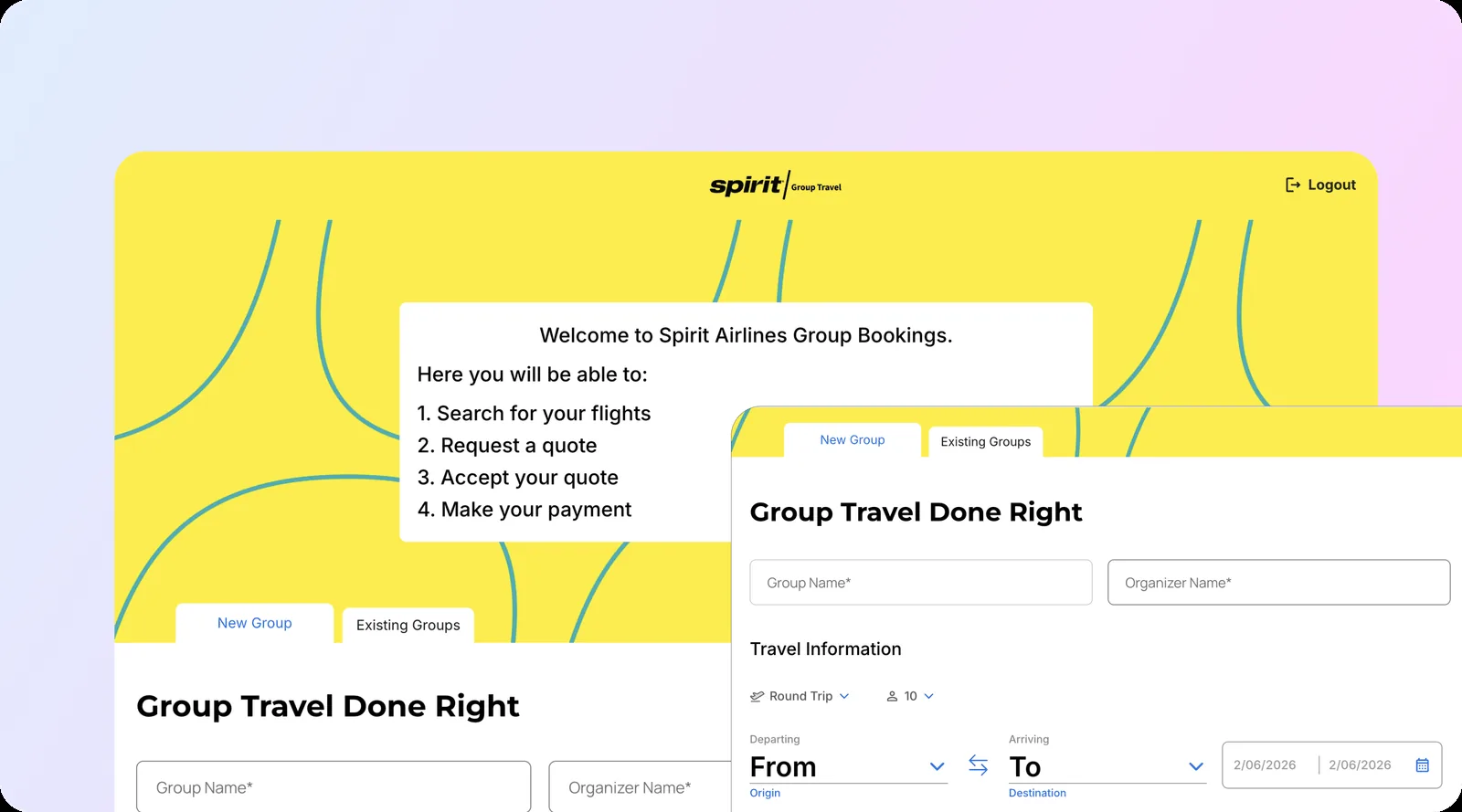
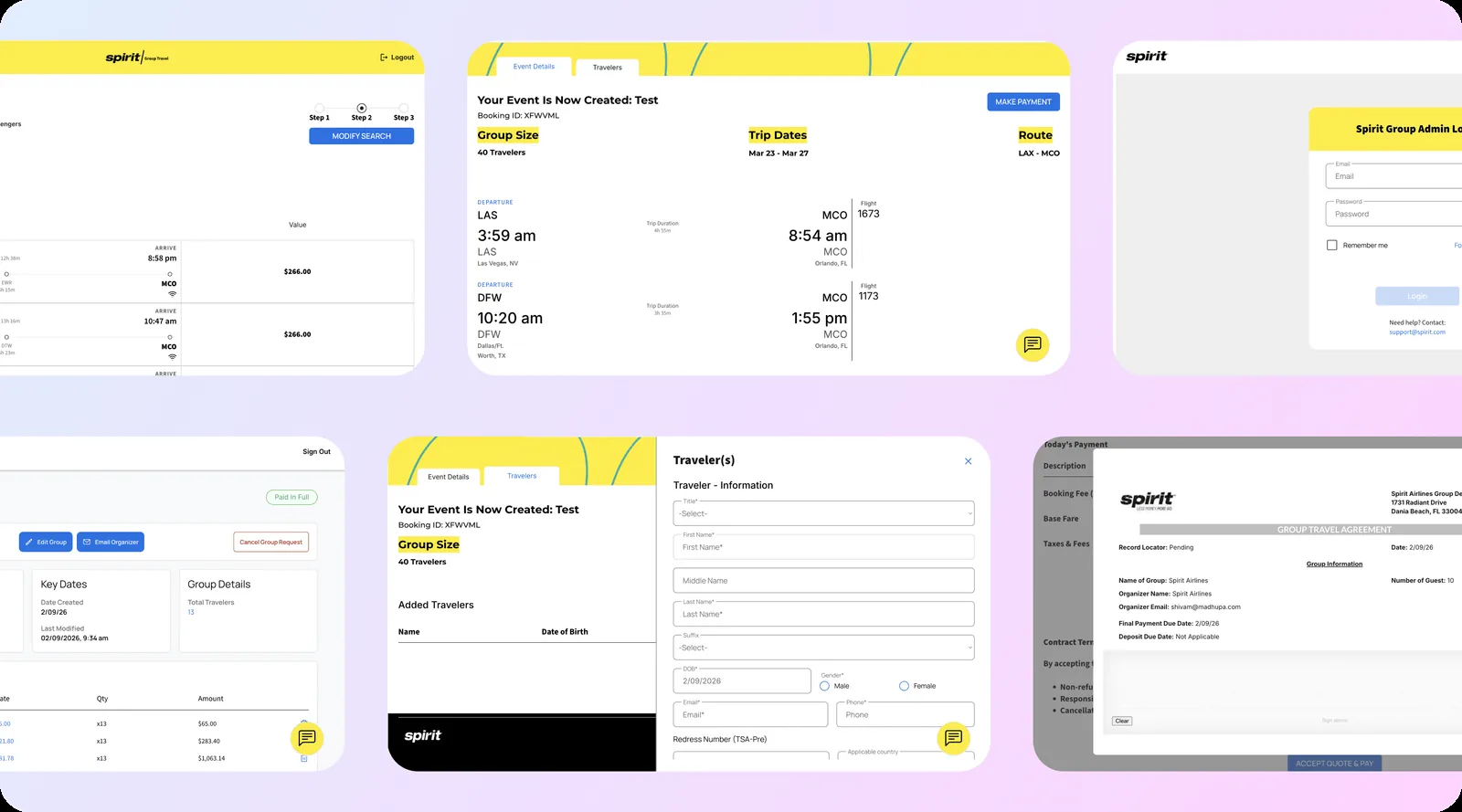
A public quote request form with manifest upload, a pricing engine that checks live fare inventory and applies the discount matrix automatically, a three-tier approval chain triggered by discount depth, split deposit-and-balance payments, and an internal dashboard for the group desk.
How a group booking moves through the platform
| Feature | What it does |
|---|---|
| Group quote request form | Public-facing, with CSV manifest upload, so an organiser pastes a passenger list instead of typing twenty names into a web form. |
| Rules-based pricing engine | Checks live fare class inventory through the Sabre integration, applies the discount matrix automatically, and flags anything outside policy rather than approving it silently. Quotes carry an expiry timer, so held inventory releases on its own. |
| Tiered approval chain | Agent to supervisor to revenue management, triggered by discount depth rather than passenger count. |
| Deposit and balance payments | Split through Stripe, with automated reminders to the organiser at 30, 14 and 3 days before the balance is due. |
| Group desk dashboard | Quote pipeline, expiry status, conversion rate and desk workload in one internal view. |
| Manifest editing | Stays open until 72 hours before departure, with seat blocks held throughout. |
| Role-based permissions | Pricing controls stay with the people authorised to change them. |
What changed?
Reported by the client: the average group quote for parties of 20 or more fell from 3 days to 40 minutes, group bookings rose from 140 to 610 a month within two quarters, 17 staff hours a week came back to the group desk with no change in headcount, pricing corrections fell 84%, and payment collection fell from 11 days to 4.
Bookings a month, before and after
| Measure | Before | After |
|---|---|---|
| Average group quote (20+ passengers) | 3 days | 40 minutes |
| Group bookings a month | 140 | 610, within two quarters |
| Staff hours a week on the group desk | Baseline | 17 hours returned, same headcount |
| Pricing corrections | Baseline | 84% fewer |
| Payment collection time | 11 days | 4 days |
The group desk now processes roughly four times the volume it did before, with the same six people. The spring break window passed without overtime for the first time anyone there could remember, and the queue of unanswered requests, the thing nobody had been able to measure under the old spreadsheet process, no longer exists, because every request enters the pipeline whether or not an agent has opened it.
Why did the quote turnaround fall so far?
A manual quote meant an agent checking fare inventory by hand and applying a discount from a printed matrix. The pricing engine does both automatically against live Sabre inventory, and only escalates to a person when a request falls outside the standard approval tiers.
That is the same reasoning behind the 84% drop in pricing corrections: a rules engine checking discount thresholds every time makes fewer mistakes than a person doing it under deadline pressure during spring break. The approval chain still exists for anything genuinely outside policy, so the automation replaced repetitive checking, not judgment calls.
Why did payment collection speed up?
Splitting each booking into a deposit and a balance through Stripe, with reminders sent automatically at 30, 14 and 3 days, moved payment collection from 11 days down to 4.
Payment collection time, before and after
Under the old process, a single full-amount invoice with no automated follow-up meant collection depended on someone remembering to chase an overdue payment. Reminders sent on a schedule catch most of that gap before it becomes an overdue balance, and the smaller upfront deposit gets an organiser committed earlier in the process.
What does the platform's brand system look like?
Inter, in five weights from Regular to Extrabold, on a bright yellow-and-blue palette built for the group-travel product rather than reusing the airline's main site styling wholesale.
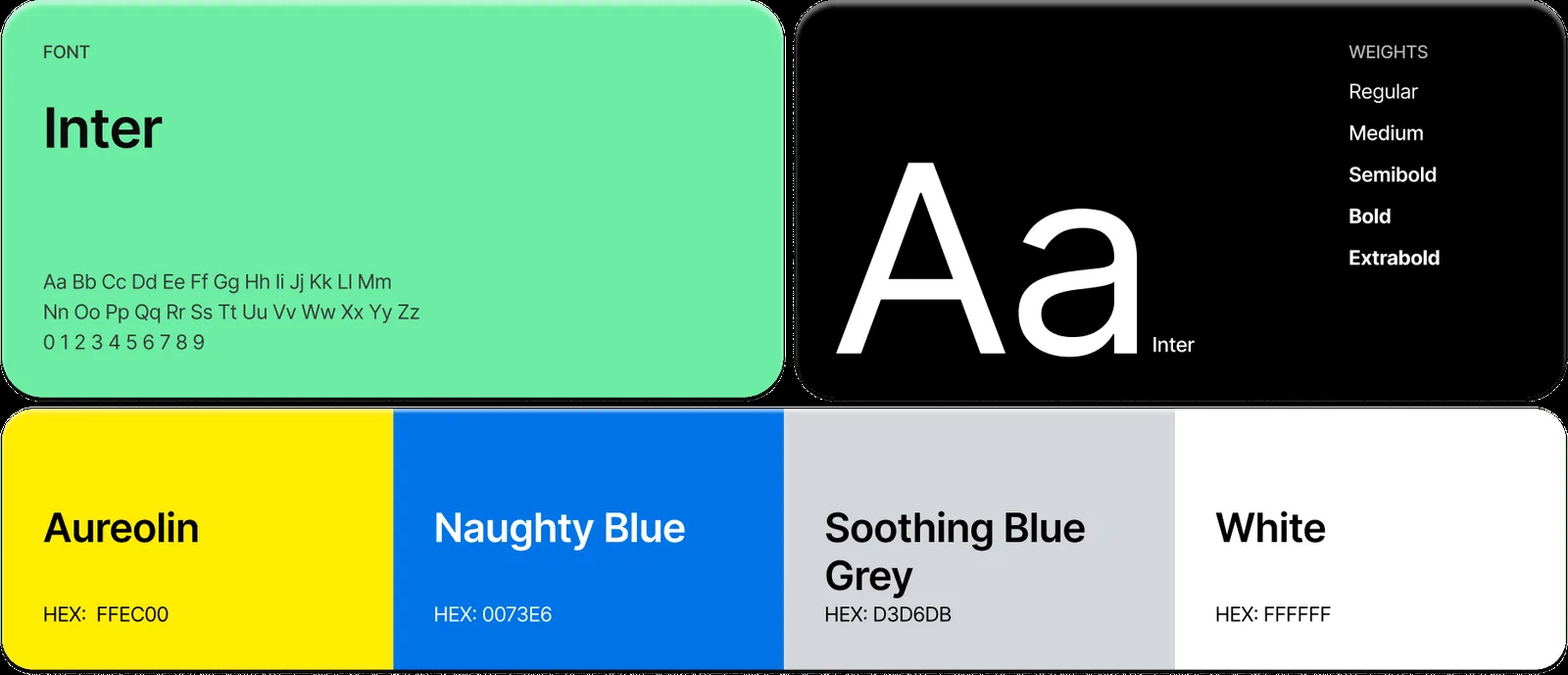
| Color | Hex |
|---|---|
| Aureolin | #FFEC00 |
| Naughty Blue | #0073E6 |
| Soothing Blue Grey | #D3D6DB |
| White | #FFFFFF |
How does a group booking move through the platform?
An organiser submits a quote request with a passenger manifest, the pricing engine returns a quote against live Sabre fare inventory, anything outside standard discount policy escalates through the approval chain, the organiser pays a deposit and then the balance through Stripe, and the manifest stays open for edits until 72 hours before departure.
- Request. Public quote form with CSV manifest upload for the passenger list.
- Price. The engine checks live Sabre fare inventory and applies the discount matrix, with a quote expiry timer.
- Approve. Standard discounts clear automatically; deeper discounts escalate agent to supervisor to revenue management.
- Pay. Deposit due at booking, balance due later, with reminders at 30, 14 and 3 days.
- Manage. Manifest edits stay open until 72 hours before departure, with seats held throughout.
Want a similar product built?
This is custom software, not a GoHighLevel or CRM project, the same kind of build as our Coo, Our Fusion, Drop My Drip, DEMP, HirePrep, GoHangars , Farmers Market Haul and ITS case studies. If you run a travel, booking, or group-sales operation with a manual quote or approval process behind it, see our custom web applications page, or enterprise software development if the build spans sales, operations and finance teams the way this one does.
See our other case studies, our custom software page and technology stack for what we actually build with, and our about page for who's behind the work. Use the contact page to tell us what you're trying to build.
More questions about building a group booking platform
How much does it cost to build a booking platform like this?
It depends on scope. This build took 10 weeks of product strategy and development for the quote form, pricing engine, approval chain, payments and internal dashboard. Custom software is quoted per project, not from a fixed price list, so book a call for a number specific to your build.
How long does a build like this take?
This platform took 10 weeks. Timeline depends on how many approval tiers and payment rules the first version needs, and how much the pricing logic has to integrate with an existing fare or inventory system.
Can this work outside airline group travel?
Yes. The pattern, an automated quote engine plus a tiered approval chain plus split payments, applies to any business selling in bulk with a negotiated-discount structure: hotels, event venues, and B2B wholesale are common fits. See our solutions pages for the problem-first side of what we build, then book a call and tell us what you're building.
Does this replace Sabre or a GDS?
No. The pricing engine reads live fare inventory from Sabre rather than replacing it. What we build sits on top: the quote workflow, approval chain, and payment collection a GDS module doesn't handle.
Who owns the code and design after the build?
You do. Confirm the specifics in your contract, but the standard is that what we build for you is yours.
How do I talk to someone about a custom build?
Book a free 30-minute strategy call or use the contact page. Bring what you're trying to build and who it's for.