Case study at a glance
| Client | Farmers Market Haul, an app for discovering and ordering from local farmers market vendors |
|---|---|
| Problem | Farmers markets had almost no digital visibility. Most had no website, and the ones that did listed an address and opening times that were accurate years earlier. Nobody published who was trading this week or what they had, so shoppers drove out expecting produce that was not there and vendors brought stock that did not sell. |
| What we built | A discovery and ordering app connecting shoppers with local farmers market vendors: vendor profiles, a deliberately quick stock-posting flow for vendors, produce search, map view, categories, and seasonal availability guides. |
| Service | Product strategy and development |
| Timeframe | Built in 6 weeks |
| Reported results (first eighteen months) | 410 markets and 6,200 vendors listed. Vendor sales up 22% on average for those keeping a live stock list. Market footfall up 31% at venues with a complete profile. 94,000 shoppers using the app to plan a market trip. |
Figures are reported by the client for the first eighteen months. Results vary by region and how many vendors keep their stock list current.
What problem did Farmers Market Haul solve?
Farmers markets are almost entirely invisible online. Most have no website, and the ones that do usually list an address and a set of opening times that were accurate years earlier. Nobody publishes who is trading this week, and nobody publishes what they have.
The client had run a market stall for years and watched the consequence from both sides. Shoppers drove out expecting strawberries in April. Vendors brought produce that did not sell because the people who wanted it did not know it was there. Both groups concluded the market was unreliable, which became self-fulfilling: fewer shoppers showed up, so vendors stocked more conservatively, so there was even less reason for a shopper to make the trip.
The hard constraint was who does the data entry. A vendor standing behind a table at seven in the morning is not going to fill in a product catalogue. Anything requiring more than a couple of minutes on a phone would simply not get used, and an out-of-date listing is worse than none, since it repeats the exact problem the app was built to fix.
What did we build?
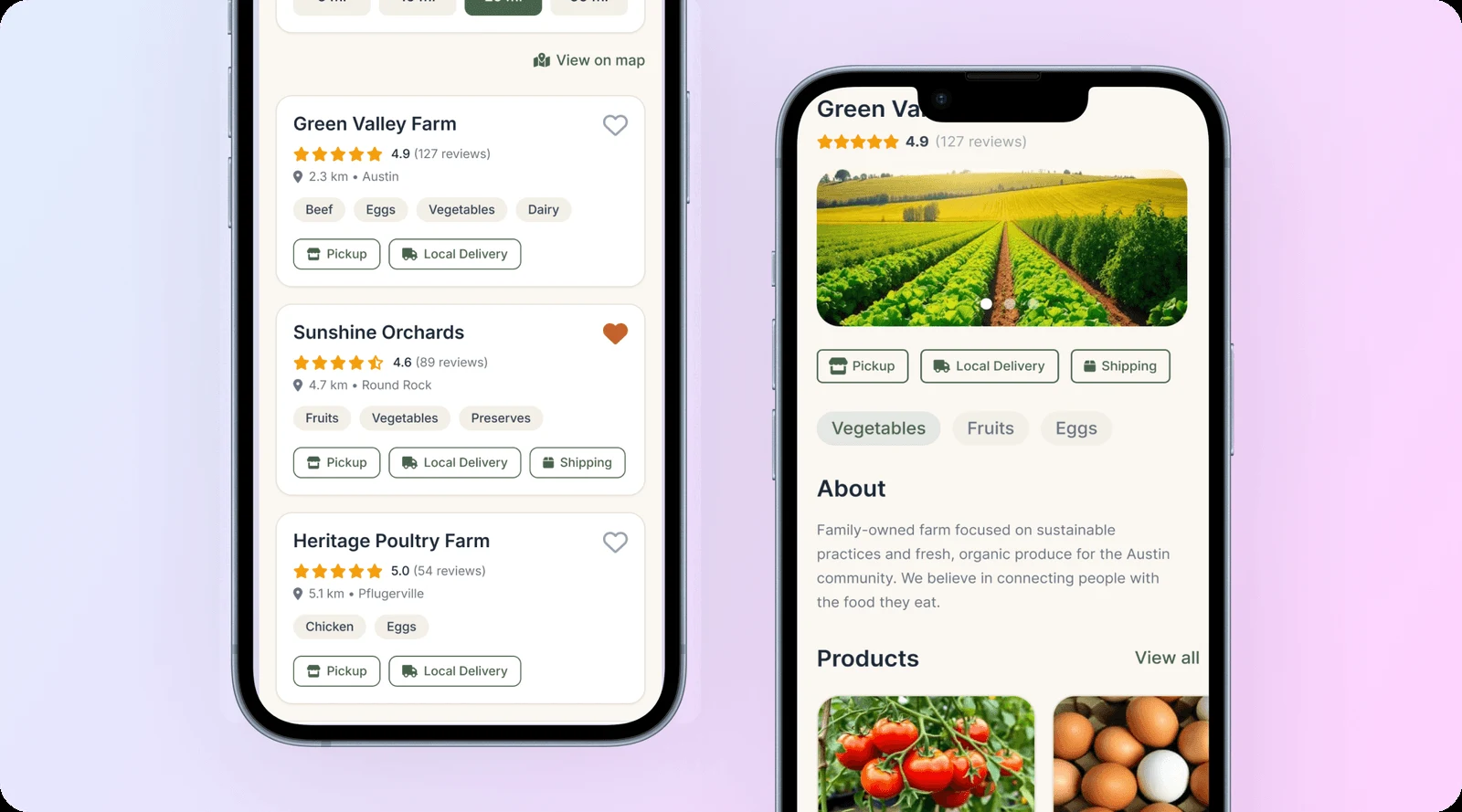
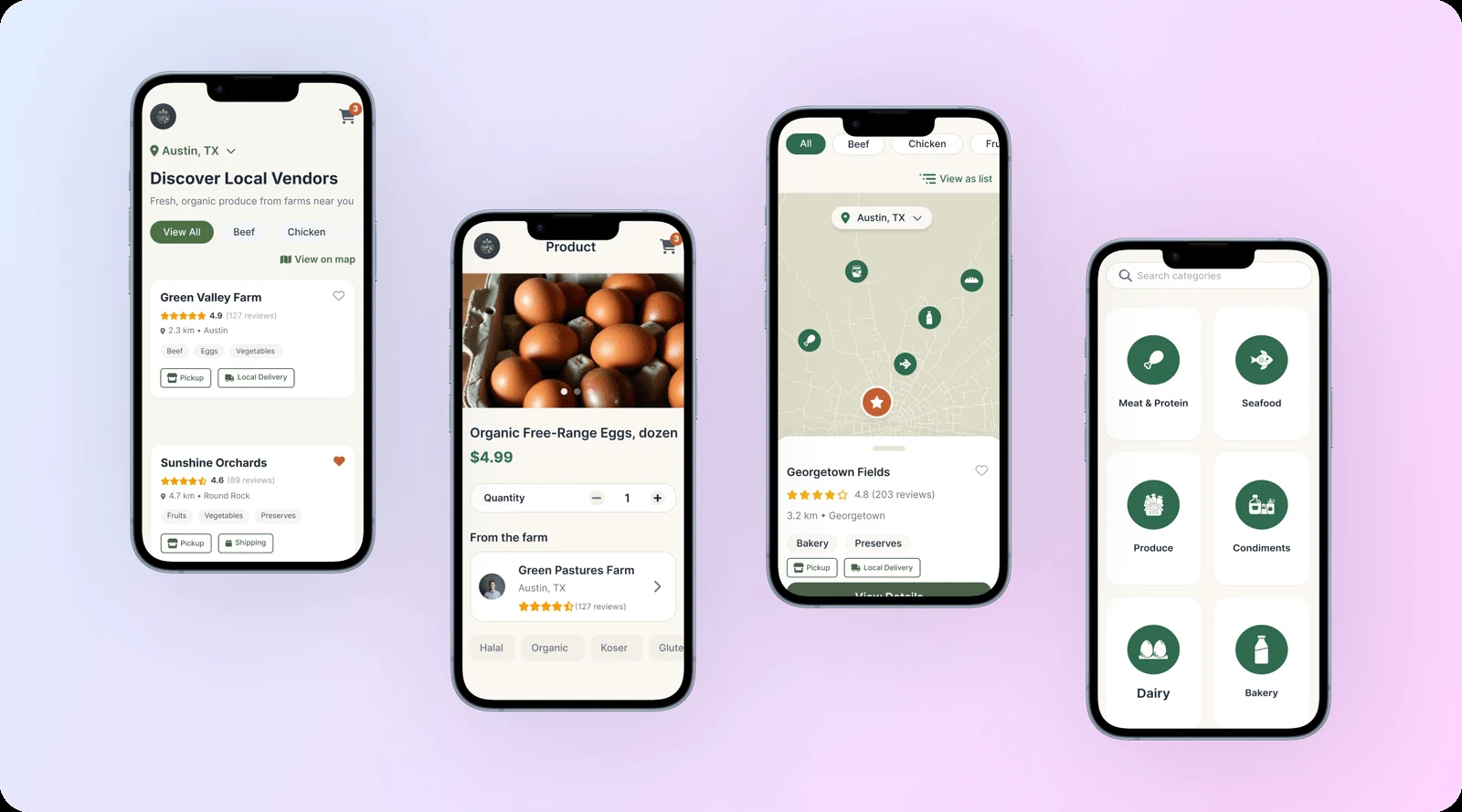
A discovery and ordering app where a vendor posts their week's stock in under two minutes from a phone at the stall, and a shopper searches by produce, market, or map to find who has what, this weekend, nearby.
How a market visit gets planned
| Feature | What it does |
|---|---|
| Market profiles | Trading days, seasonal schedule, parking, payment methods, and whether dogs are welcome, maintained by the market operator. |
| Vendor stock updates | Deliberately crude: a vendor photographs the stall or taps a few items from their saved list, and it publishes. Two minutes, standing up, one hand. |
| Produce search | Shoppers search by produce rather than by market, so someone looking for a specific item finds who has it this weekend. |
| Follows and alerts | Following a vendor or a market triggers an alert when new stock posts. |
| Seasonal availability guides | Explain what is genuinely in season locally, addressing the strawberries-in-April problem at its source. |
| Pre-order and collection | Available for vendors who want to offer it, alongside walk-up buying. |
| Market operator dashboard | Shows which stalls are posting and which are not. |
What changed?
Reported by the client, over the first eighteen months: 410 markets and 6,200 vendors listed, vendor sales up 22% on average for those keeping a live stock list, market footfall up 31% at venues with a complete profile, and 94,000 shoppers using the app to plan a market trip.
Farmers Market Haul: reported results
| Measure | Reported result |
|---|---|
| Markets listed | 410, first eighteen months |
| Vendors listed | 6,200, first eighteen months |
| Vendor sales, live stock list | Up 22% on average |
| Market footfall, complete profile | Up 31% |
| App shoppers | 94,000 planning a market trip |
The 22% vendor sales lift tracks almost exactly with posting frequency, which gave market operators a concrete argument for getting stalls onto the platform rather than a general appeal to modernize. Several markets now use the vendor dashboard for stall allocation and waiting lists, a use the app was not built for and the feature operators now ask about first.
Why is the vendor stock update deliberately crude?
Because the person doing it is standing at a market stall at seven in the morning, not sitting at a desk. A photo or a tap on a saved list, published in under two minutes with one hand, is the ceiling of what actually gets used. Anything that asked for more would get skipped, and a stale listing is worse than no listing at all.
That constraint shaped the rest of the product. Seasonal availability guides do the explaining work a vendor would otherwise have to type out every week, so the app can set an accurate shopper expectation without adding to what the vendor enters.
What does Farmers Market Haul's brand system look like?
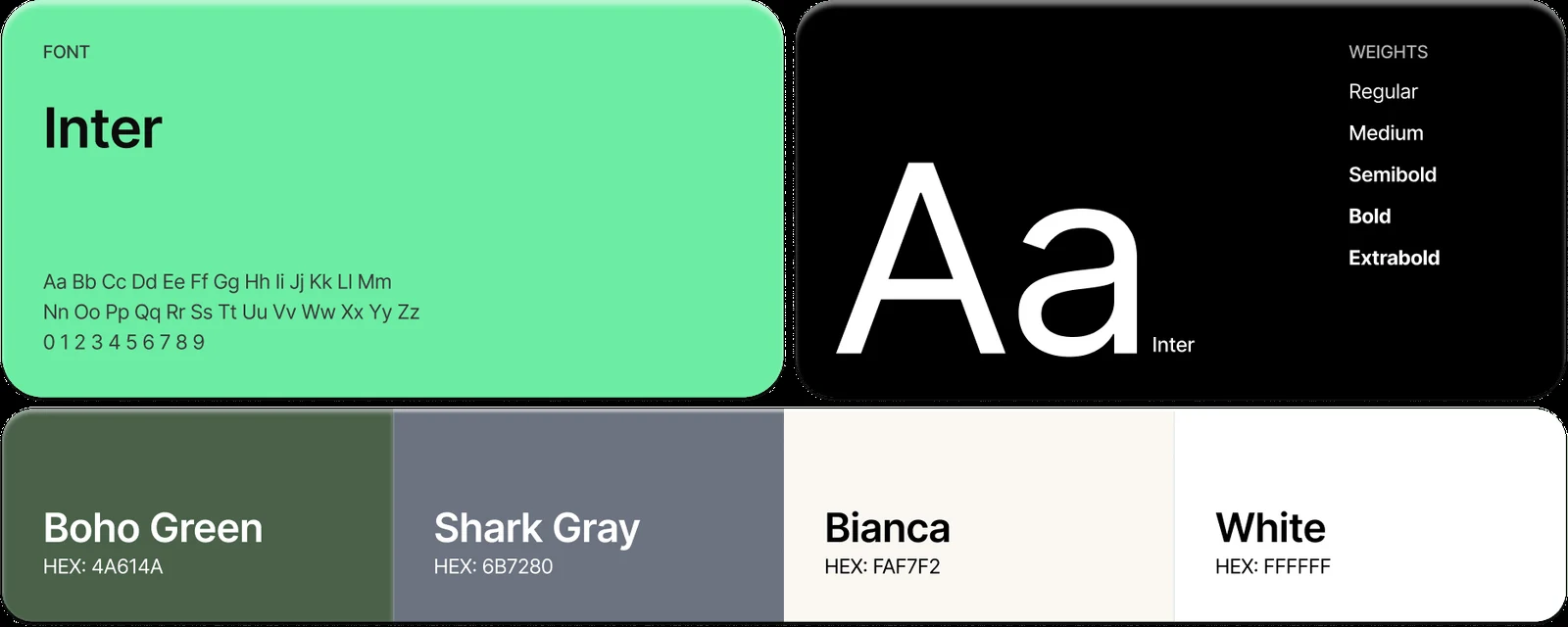
Inter, in five weights from Regular to Extrabold, on a palette of Boho Green, Shark Gray, Bianca, and white.
| Color | Hex |
|---|---|
| Boho Green | #4A614A |
| Shark Gray | #6B7280 |
| Bianca | #FAF7F2 |
| White | #FFFFFF |
How does a shopper plan a market trip in the app?
A shopper searches by produce or browses the map and categories, checks the seasonal guide to see what is genuinely available, follows a vendor or market for alerts, and either shows up or pre-orders for collection where a vendor offers it.
- Search or browse. By produce, by category, or on the map view of nearby markets.
- Check what's in season. The seasonal guide sets an accurate expectation before the trip.
- Follow for alerts. A follow on a vendor or market triggers a notification when new stock posts.
- Visit or pre-order. Walk up at the market, or pre-order for collection where the vendor supports it.
Want a similar product built?
Farmers Market Haul is custom software, not a GoHighLevel or CRM project, the same kind of build as our Coo, Our Fusion, Drop My Drip, DEMP, Spirit Airlines, HirePrep , GoHangars and ITS case studies. If you need a discovery-and-ordering app for a local, time-sensitive market, see our custom web applications page, or mobile app development for the platform, app store, and push notification questions that come with a mobile product.
See our other case studies, our custom software page and technology stack for what we actually build with, and our about page for who's behind the work. Use the contact page to tell us what you're trying to build.
More questions about building a marketplace app like Farmers Market Haul
How much does it cost to build an app like Farmers Market Haul?
It depends on scope. This build took 6 weeks of product strategy and development for vendor profiles, a fast stock-posting flow, produce search, map view, and seasonal guides. Custom software is quoted per project, not from a fixed price list, so book a call for a number specific to your build.
How long does a build like this take?
Farmers Market Haul shipped in 6 weeks from product strategy through development. Timeline depends on how many core features the first version needs and how much of the design is settled before development starts.
Can this work for something other than farmers markets?
Yes. The same pattern, a supply side that can only spare a couple of minutes to list what it has, and a demand side searching for a specific item nearby, fits pop-up markets, food trucks, and other time-sensitive local sellers. See our solutions pages for the problem-first side of what we build, then book a call and tell us what you're building.
Who owns the code and design after the build?
You do. Confirm the specifics in your contract, but the standard is that what we build for you is yours.
How do I talk to someone about a custom build?
Book a free 30-minute strategy call or use the contact page. Bring what you're trying to build and who it's for.